Written by Andrew Horn of Amherst, NH
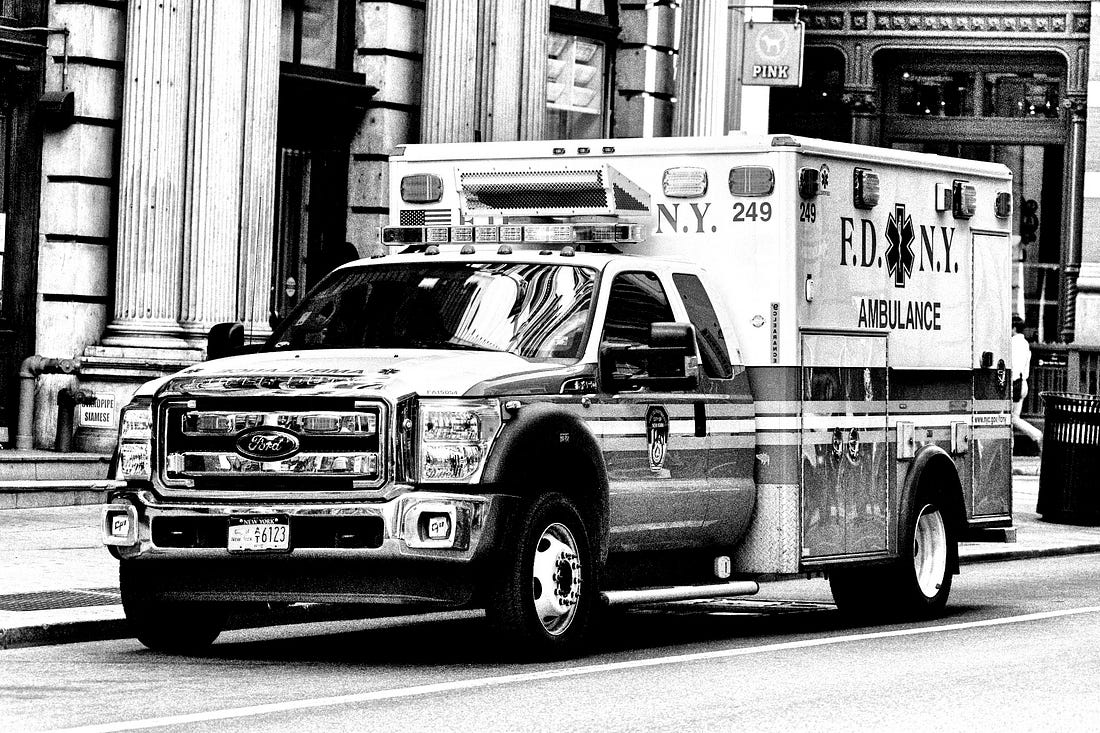 |
Executive Summary
HB 725-FN (Ambulance Billing)
Why Notable: Prohibits balance billing and caps ambulance charges for nonparticipating providers, thereby protecting patients from surprise costs.
Committee: House Commerce And Consumer AffairsHB 434-FN (Rental Car Coverage)
Why Notable: Requires insurers to provide at least 7 days of rental car reimbursement if a not-at-fault policyholder’s car is totaled or unsafe to drive.
Committee: House Commerce And Consumer AffairsHB 507-FN (Mental Health Credentialing)
Why Notable: Speeds up the health insurer credentialing process for mental health providers, aiming to improve access to care by requiring 30-day application turnaround.
Committee: House Commerce And Consumer AffairsHB 705 (Healthcare Cost Transparency)
Why Notable: Mandates that insurance carriers post in-network and out-of-network rates in machine-readable files, enhancing consumer visibility into healthcare prices.
Committee: House Commerce And Consumer AffairsHB 62-FN (Domestic Violence Protections)
Why Notable: Expands legal protections for domestic violence victims and includes provisions to offer financial assistance to certain National Guard members who have experienced sexual harassment.
Committee: House Criminal Justice And Public SafetyHB 102-FN (Federal LE Oversight)
Why Notable: Proposes giving county sheriffs the power to oversee all federal law enforcement activities in their jurisdiction, raising significant questions about federal-state authority.
Committee: House Criminal Justice And Public SafetyHB 662-FN (Abortion Videos in Health Class)
Why Notable: Requires high schools to show specific anti-abortion videos, generating intense debate over medical accuracy, parental rights, and curriculum standards.
Committee: House Education Policy And AdministrationHB 667-FN (Gestational Development Videos)
Why Notable: Mandates that students in grades 6–12 and even college students view videos detailing fetal development, sparking concerns about academic freedom and medical accuracy.
Committee: House Education Policy And AdministrationHB 392-FN (Equity Office Dissolution)
Why Notable: Orders the dismantling of the Department of Health and Human Services’ Office of Health Equity and the Governor’s Diversity Council, igniting debate about inclusion versus government overreach.
Committee: House Health, Human Services And Elderly AffairsHB 293-FN (Online Obscenity Filters)
Why Notable: Seeks to require electronic devices to come with filters blocking obscene materials for minors, sparking controversy over technology mandates and parental responsibility.
Committee: House Judiciary
Contents
Quick Summary - Part 1 of 2
In-Depth Analyses - Part 1 of 2
Quick Summary - Part 1 of 2
House Commerce And Consumer Affairs
HB 725-FN (4 sponsors, Bipartisan, Online Testimony: 9 support / 4 oppose): Prohibits balance billing for ambulance services by establishing criteria for reimbursing nonparticipating providers.
HB 434-FN (1 sponsor, Republican, Online Testimony: 3 support / 5 oppose): Requires insurance policies to include at least 7 days of rental car coverage when a vehicle is declared totaled or unsafe through no fault of the policyholder.
HB 507-FN (3 sponsors, Bipartisan, Online Testimony: 6 support / 3 oppose): Mandates that health carriers complete mental health provider credentialing within 30 days (45 for specialists) and retroactively cover in-network care from the application date.
HB 705 (4 sponsors, Lean Republican, Online Testimony: 5 support / 1 oppose): Requires health carriers to publicly disclose detailed cost information (in-network, out-of-network, and prescription drug data) in machine-readable files.
House Criminal Justice And Public Safety
HB 62-FN (5 sponsors, Republican, Online Testimony: 3 support / 3 oppose): Expands protections for domestic violence victims and National Guard members by adding financial assistance and defining “coercive control” and military protective orders.
HB 87-FN (1 sponsor, Republican, Online Testimony: 6 support / 1 oppose): Imposes a class B misdemeanor and fines for posting signs on land without legal ownership.
HB 102-FN (4 sponsors, Republican, Online Testimony: 4 support / 8 oppose): Grants county sheriffs oversight over federal law enforcement actions within their counties, requiring advance notice and authorizing intervention if protocols aren’t followed.
HB 103 (2 sponsors, Republican, Online Testimony: 4 support / 11 oppose): Adds an exception to the governor’s extradition duty, allowing the state to withhold extradition if charges involve constitutionally protected activities.
HB 206-FN (12 sponsors, Republican, Online Testimony: 15 support / 10 oppose): Establishes limits on warrantless government agent entries into secured premises, requiring consent or exigent circumstances and mandating warrant presentation.
HB 321-FN (8 sponsors, Bipartisan, Online Testimony: 3 support / 4 oppose): Extends the fine payment period for certain motor vehicle violations from 30 to 90 days, with an option for a second 90-day extension.
HB 330-FN (9 sponsors, Republican, Online Testimony: 2 support / 5 oppose): Strengthens privacy protections by prohibiting non-governmental copying/scanning of driver’s license data and imposing steep penalties for violations.
HB 338 (4 sponsors, Lean Republican, Online Testimony: 6 support / 5 oppose): Raises the standard for warrantless searches by fish and game officers from reasonable suspicion to probable cause.
HB 343 (8 sponsors, Lean Democratic, Online Testimony: 109 support / 46 oppose): Expands reporting requirements for the northern border alliance program to include detailed arrest, citation, and demographic data.
House Education Policy And Administration
HB 662-FN (6 sponsors, Republican, Online Testimony: 24 support / 964 oppose): Requires public schools to show simulated abortion procedure videos (by Live Action) during health education and prohibits materials from abortion providers.
HB 667-FN (6 sponsors, Republican, Online Testimony: 20 support / 601 oppose): Mandates that students in grades 6–12 (and later college students) view a gestational development video as part of health education and as a graduation requirement.
HB 730-FN (7 sponsors, Republican, Online Testimony: 20 support / 443 oppose): Requires school districts to include adoption education in health classes for grades 9–12 and in colleges when discussing STIs or contraception.
HB 557 (6 sponsors, Republican, Online Testimony: 4 support / 42 oppose): Mandates that school budget ballots include key metrics such as the average cost per pupil, five-year average daily enrollment, and full-time teacher-to-administrator ratio.
HB 394 (1 sponsor, Republican, Online Testimony: 1 support / 24 oppose): Revises cooperative school district budget committees by converting a school board–appointed member to a non-voting ex-officio role.
HB 564 (9 sponsors, Republican, Online Testimony: 22 support / 16 oppose): Revises SAU budget adoption procedures by giving school district voters a direct up-or-down vote on the proposed budget, with a default option if rejected.
HB 108 (9 sponsors, Republican, Online Testimony: 6 support / 5 oppose): Clarifies that in multi-district bullying/cyberbullying incidents, the originating district is responsible for the investigation.
HB 673-FN (8 sponsors, Democratic, Online Testimony: 61 support / 15 oppose): Requires school districts and charter schools to adopt comprehensive anti-bullying policies and report substantiated incidents semiannually with public data.
House Executive Departments And Administration
HB 180 (1 sponsor, Republican, Online Testimony: 0 support / 2 oppose): Revises training requirements for critical incident stress management teams to require initial ICISF-approved training and proper designation of team members.
HB 438-FN (Democratic, Online Testimony: 24 support / 5 oppose): Prohibits New Hampshire from entering into for-profit private contracts for immigrant detention, requiring adherence to federal ICE detention standards and executive council approval for National Guard deployment.
HB 598 (4 sponsors, Republican, Online Testimony: 3 support / 6 oppose): Establishes a committee to study data sources and recommend legislation to standardize public data formats across state agencies.
HB 702-FN (8 sponsors, Republican, Online Testimony: 3 support / 11 oppose): Amends the New Hampshire Retirement System to exclude extra or special duty pay when calculating the annual hour limit for retired part-time police officers.
HB 727-FN (3 sponsors, Republican, Online Testimony: 71 support / 14 oppose): Modifies Group II retirement benefits by restoring the original benefit promises for public employees and revising the calculation of "earnable compensation."
House Fish And Game And Marine Resources
HB 211-FN (9 sponsors, Lean Republican, Online Testimony: 5 support / 3 oppose): Authorizes the use of air rifles for hunting by defining the required kinetic energy and establishing a tag program for air rifle hunting.
HB 61 (6 sponsors, Bipartisan, Online Testimony: 18 support / 0 oppose): Establishes a committee to study oyster harvesting laws and licensure to promote the expansion of the oyster industry.
HB 404 (2 sponsors, Democratic, Online Testimony: 4 support / 3 oppose): Amends the definition of “family” for purchasing a Hike Safe card to include domestic partners, stepchildren, and individuals under family guardianship.
HB 647-FN (12 sponsors, Lean Republican, Online Testimony: 4 support / 2 oppose): Allows the Fish and Game Department to set discounted lifetime hunting and fishing license fees for newborns based on actuarial data.
HB 655-FN (11 sponsors, Lean Republican, Online Testimony: 14 support / 0 oppose): Increases restitution amounts for illegal wildlife takings, mandates restitution orders, and imposes penalties for non-payment.
HB 579 (4 sponsors, Republican, Online Testimony: 10 support / 1 oppose): Requires applicants for a fish and game guide license to pass a standardized test (with study guide), administered by qualified fish and game officers.
House Health, Human Services And Elderly Affairs
HB 392-FN (7 sponsors, Republican, Online Testimony: 27 support / 2725 oppose): Directs the dissolution of the Office of Health Equity, the civil rights/environmental justice functions of the Department of Environmental Services, and the Governor’s Advisory Council on Diversity and Inclusion.
HB 751-FN (5 sponsors, Bipartisan, Online Testimony: 126 support / 8 oppose): Establishes a certification process for substance use treatment facilities, creates a dedicated certification fund, and designates a behavioral health specialist for complaint investigations.
HB 645-FN (4 sponsors, Bipartisan, Online Testimony: 14 support / 3 oppose): Directs the Prescription Drug Affordability Board to leverage existing data and establish data sharing agreements, while repealing certain drug price disclosure requirements.
HB 724-FN (3 sponsors, Democratic, Online Testimony: 93 support / 7 oppose): Lowers the blood lead level threshold for investigation, mandates that building permits for pre-1978 structures include EPA-RRP license numbers, and presumes pre-1978 housing contains lead hazards.
HB 756-FN (8 sponsors, Democratic, Online Testimony: 84 support / 6 oppose): Requires blood lead level testing for children ages 6 and under entering daycare or public schools, with accompanying notifications and educational materials.
House Judiciary
HB 232-FN (10 sponsors, Republican, Online Testimony: 27 support / 981 oppose): Protects healthcare providers’ right to conscientiously object to participating in abortions, sterilizations, or providing artificial contraception, shielding them from administrative, civil, or criminal liability.
HB 253 (2 sponsors, Republican, Online Testimony: 1 support / 4 oppose): Requires attorneys to remit interest or dividends from interest-bearing pooled trust accounts to the public defender’s office.
HB 293-FN (10 sponsors, Republican, Online Testimony: 33 support / 31 oppose): Mandates that electronic devices include default filters to block minors from accessing obscene material and establishes a private right of action for parents if filters are intentionally disabled.
HB 391-FN (2 sponsors, Republican, Online Testimony: 9 support / 4 oppose): Creates an anti-SLAPP statute that grants substantive immunity to defendants whose First Amendment rights are targeted by strategic lawsuits against public participation.
HB 400 (1 sponsor, Republican, Online Testimony: 6 support / 220 oppose): Requires that collective bargaining negotiations with public bodies be conducted as public meetings under the Right-to-Know law, making negotiation details publicly available.
HB 601-FN (3 sponsors, Democratic, Online Testimony: 25 support / 4 oppose): Creates private and criminal causes of action against companies that misstate their environmental impact, to combat deceptive greenwashing practices.
HB 485 (2 sponsors, Republican, Online Testimony: 13 support / 3 oppose): Permits lottery winners to remain anonymous if they request anonymity and meet specific criteria (e.g., domestic violence victim, restraining order, or safety concerns determined by the lottery commissioner).
In-Depth Analysis - Part 1 of 2
House Commerce And Consumer Affairs
HB 725-FN
AN ACT relative to ground ambulance services.
4 sponsors, Bipartisan
Sponsor(s): (Prime) Rep. Jerry Stringham (D), Rep. Mark Proulx (R), Rep. Katelyn Kuttab (R), Sen. Suzanne Prentiss (D)
Selected quote(s) from the bill:
1 New Section; Managed Care Law; Ambulance Billing; Payment for Reasonable Value of Services; Prohibition on Balance Billing. Amend RSA 420-J by inserting after section 8-e the following new section:
420-J:8-f Ambulance Billing; Payment for Reasonable Value of Services, Prohibition on Balance Billing.
I. A health plan carrier shall provide payment to a nonparticipating ambulance service provider for ambulance service provided to a covered individual in an amount equal to the lesser of:
(a) The rate set or approved, by contract or ordinance, by the county or municipality in which the ambulance service originated;
(b) Three hundred twenty-five percent of the current published rate for ambulance service as established by the Centers for Medicare and Medicaid Services under Title XVIII of the federal Social Security Act, 42 U.S.C. section 1395 et seq., for the same ambulance service provided in the same geographic area; or
(c) The nonparticipating ambulance service provider's billed charges.
II.(a) If a health carrier makes payment to a nonparticipating ambulance service provider according to paragraph I for ambulance service provided to a covered individual:
(1) The payment shall be considered payment in full for the ambulance service provided, except for any copayment, coinsurance, deductible, and other cost sharing amounts that the health plan requires the covered individual to pay; and
(2) The nonparticipating ambulance service provider is prohibited from billing the covered individual for any additional amount for the ambulance service provided.
(b) The copayment, coinsurance, deductible, and other cost sharing amounts that a health plan requires a covered individual to pay in connection with ambulance service provided by a nonparticipating ambulance service provider shall not exceed the copayment, coinsurance, deductible, and other cost sharing amounts that the covered individual would be required to pay if the ambulance service had been provided to the covered individual by a participating ambulance service provider.
Summary:
This bill prohibits balance billing for ambulance services under the managed care law and sets criteria for paying nonparticipating ambulance providers.
Argument For:
This bill protects patients from unexpected, high ambulance bills by preventing balance billing. It ensures fair reimbursement to ambulance providers while promoting access to emergency care without the fear of financial hardship.
Argument Against:
This bill protects patients from unexpected, high ambulance bills by preventing balance billing. It ensures fair reimbursement to ambulance providers while promoting access to emergency care without the fear of financial hardship.
Online Testimony
Currently, 9 people support and 4 people oppose the bill. 69% support of 13 people
Support
I strongly support this bill as it provides much-needed protections for patients by ensuring that they are not burdened with unexpected ambulance service charges. By limiting nonparticipating ambulance providers from balance billing, the bill prevents patients from facing financial hardship during an emergency. It also promotes fairness by ensuring that insurance companies reimburse providers at a reasonable rate, making it easier for individuals to receive care without fearing high out-of-pocket costs. This legislation strikes a necessary balance between protecting consumers and ensuring ambulance services are fairly compensated for their critical work. An emergency ambulance ride is not something a consumer can price-shop!
Opposition
This is a repeat of a bill wisely voted down last year. Requiring payment of 325% of the Medicare rate to make up for low Medicare rates is price gouging and should not be allowed. It is unclear what happens if the policy requires 100% copay to nonparticipating ambulance service providers. There is a Senate bill which requires payment of fair share only which should be adopted instead.
Hearing: Wednesday, Feb 05 at 10:30 a.m. in Room 302-304 in the Legislative Office Building and streaming on YouTube.
HB 434-FN
AN ACT requiring a policyholder's insurance company to provide a rental car for at least 7 days after determination that the vehicle is totaled or unsafe to operate when the policyholder is not at fault for the accident.
1 sponsor, Republican
Sponsor(s): (Prime) Rep. Stephen Pearson (R)
Selected quote(s) from the bill:
1 New Paragraph; Rental Car Coverage Required. Amend RSA 264:18 by inserting after paragraph VII the following new paragraph:
VIII. Rental Car Coverage Required. No policy shall be issued under the provisions of RSA 264:14, with respect to a vehicle registered or principally garaged in this state, unless the policy provides total coverage for a rental vehicle obtained through a regional or national rental car company of the policyholder's choice for at least 7 days upon determination by the insurance company or its agent that the vehicle is totaled or cannot be safely operated, and that the driver was not at fault, based on a police report or reported decision of the insurance company or its designee, whichever occurs first.
Summary:
This bill mandates that insurance policies in New Hampshire include at least 7 days of rental car coverage if the policyholder's vehicle is totaled or deemed unsafe to operate through no fault of their own.
Potential Argument For:
None
Argument Against:
This bill ensures policyholders who are not at fault for an accident that totals their vehicle have access to a rental car for at least seven days, easing the burden of finding alternative transportation.
Online Testimony
Currently, 3 people support and 5 people oppose the bill. 62% oppose of 8 people
Opposition
This is a case of the state sticking its nose where it doesn't belong. In private contracts between insurers and customers. Seat of the pants feel here is the more requirements the state places upon an insurance company, the higher our statewide average rates will be.
Hearing: Wednesday, Feb 05 at 11:00 a.m. in Room 302-304 in the Legislative Office Building and streaming on YouTube.
HB 507-FN
AN ACT relative to the timeline for credentialing of mental health care providers.
3 sponsors, Bipartisan
Sponsor(s): (Prime) Rep. Alicia Gregg (D), Rep. Gaby Grossman (D), Rep. Katelyn Kuttab (R)
Selected quote(s) from the bill:
1 Managed Care Law; Credentialing Verification Procedures; Mental Health Care Providers. Amend RSA 420-J:4, I(h) to read as follows:
(h) Act upon and finalize the credentialing process within 30 calendar days of receipt of a clean and complete application for primary care physicians and mental health providers and within 45 days [for specialists] of receipt of a clean and complete application for specialists. …
2 New Paragraph; Credentialing Verification Procedures. Amend RSA 420-J:4 by inserting after paragraph VII the following new paragraph:
VIII. A health carrier shall cover health care services and treatments as in-network retroactively from the date of credentialing application submission by the health care provider.
Summary:
This bill mandates that health carriers process complete mental health provider credentialing applications within 30 days and retroactively cover in-network treatments from the application submission date.
Potential Argument For:
This bill improves access to mental healthcare by expediting the credentialing process and ensuring timely coverage for patients.
Potential Argument Against:
This bill may increase costs for health carriers, potentially leading to higher insurance premiums for consumers.
Online Testimony
Currently, 6 people support and 3 people oppose the bill. 67% support of 9 people
Hearing: Wednesday, Feb 05 at 1:15 p.m. in Room 302-304 in the Legislative Office Building and streaming on YouTube.
HB 705
AN ACT relative to health care cost transparency.
4 sponsors, Lean Republican
Sponsor(s): (Prime) Rep. Keith Ammon (R), Rep. John Hunt (R), Rep. Anita Burroughs (D), Rep. Julius Soti (R)
Selected quote(s) from the bill:
1 New Subdivision; Managed Care Law; Transparency in Coverage. Amend RSA 420-J by inserting after section 19 the following new subdivision:
Transparency in Coverage
…
420-J:21 Scope.
I. This subdivision establishes price transparency requirements for health carriers for the timely disclosure of information about costs related to covered items and services under a health benefit plan.
II. Requirements for public disclosure in this subdivision apply to in-network provider rates for covered items and services, out-of-network allowed amounts and billed charges for covered items and services, and negotiated rates and historical net prices for covered prescription drugs.
III. A health carrier shall make available on an Internet website the information required under RSA 420-J:22 in 3 machine-readable files, in accordance with the method and format requirements described in RSA 420-J:23, and updated as required under RSA 420-J:23, III.
420-J:22 Required Information. The machine-readable files made available to the public by a health carrier shall include:
I. An in-network rate machine-readable file that includes the required information under this paragraph for all covered items and services, except for prescription drugs that are subject to a fee-for-service reimbursement arrangement, which shall be reported in the prescription drug machine-readable file pursuant to paragraph III. The in-network rate machine-readable file shall include:
(a) For each coverage option offered by a health carrier, the name and the 14-digit health insurance oversight system (HIOS) identifier, or, if the 14-digit HIOS identifier is not available, the 5- digit HIOS identifier, or if no HIOS identifier is available, the employer identification number (EIN).
(b) A billing code, which in the case of prescription drugs must be an NDC, and a plain language description for each billing code for each covered item or service under each coverage option offered by a carrier.
(c) All applicable rates, which may include one or more of the following: negotiated rates, underlying fee schedule rates, or derived amounts. If a health carrier does not use negotiated rates for provider reimbursement, then the carrier shall disclose derived amounts to the extent these amounts are already calculated in the normal course of business. If the health carrier uses underlying fee schedule rates for calculating cost sharing, then the carrier shall include the underlying fee schedule rates in addition to the negotiated rate or derived amount. Applicable rates, including for both individual items and services and items and services in a bundled payment arrangement, shall be:
(1) Reflected as dollar amounts, with respect to each covered item or service that is furnished by an in-network provider. If the negotiated rate is subject to change based upon participant, beneficiary, or enrollee-specific characteristics, these dollar amounts shall be reflected as the base negotiated rate applicable to the item or service prior to adjustments for participant, beneficiary, or enrollee-specific characteristics.
(2) Associated with the national provider identifier (NPI), tax identification number (TIN), and place of service code for each in-network provider.
(3) Associated with the last date of the contract term or expiration date for each provider-specific applicable rate that applies to each covered item or service.
(4) Indicated with a notation where a reimbursement arrangement other than a standard fee-for-service model, such as capitation or a bundled payment arrangement, applies.
II. An out-of-network allowed amount machine-readable file, including:
(a) For each coverage option offered by a health carrier, the name and the 14-digit HIOS identifier, or, if the 14-digit HIOS identifier is not available, the 5- digit HIOS identifier, or, if no HIOS identifier is available, the EIN.
(b) A billing code, which in the case of prescription drugs shall be an NDC, and a plain language description for each billing code for each covered item or service under each coverage option offered by a carrier.
(c) Unique out-of-network allowed amounts and billed charges with respect to covered items or services furnished by out-of-network providers during the 90-day time period that begins 180 days prior to the publication date of the machine-readable file, except that a health carrier shall omit such data in relation to a particular item or service and provider when compliance with this paragraph would require the carrier to report payment of out-of-network allowed amounts in connection with fewer than 20 different claims for payments under a single plan or coverage. Consistent with RSA 420-J:25 II, nothing in this paragraph requires the disclosure of information that would violate any applicable health information privacy law. Each unique out-of-network allowed amount shall be:
(1) Reflected as a dollar amount, with respect to each covered item or service that is furnished by an out-of-network provider.
(2) Associated with the NPI, TIN, and Place of Service Code for each out-of-network provider.
III. A prescription drug machine-readable file, including:
(a) For each coverage option offered by a health carrier, the name and the 14-digit HIOS identifier, or, if the 14-digit HIOS identifier is not available, the 5-digit HIOS identifier, or, if no HIOS identifier is available, the EIN.
(b) The NDC, and the proprietary and nonproprietary name assigned to the NDC by the FDA, for each covered item or service that is a prescription drug under each coverage option offered by a carrier.
(c) The negotiated rates, which shall be:
(1) Reflected as a dollar amount, with respect to each NDC that is furnished by an in-network provider, including an in-network pharmacy or other prescription drug dispenser.
(2) Associated with the NPI, TIN, and place of service code for each in-network provider, including each in-network pharmacy or other prescription drug dispenser.
(3) Associated with the last date of the contract term for each provider-specific negotiated rate that applies to each NDC.
(d) Historical net prices that are:
(1) Reflected as a dollar amount, with respect to each NDC that is furnished by an in-network provider, including an in-network pharmacy or other prescription drug dispenser.
(2) Reflected as a dollar amount, with respect to each NDC that is furnished by an in-network provider, including an in-network pharmacy or other prescription drug dispenser.
(3) Associated with the 90-day time period that begins 180 days prior to the publication date of the machine-readable file for each provider-specific historical net price that applies to each NDC, except that a health carrier shall omit such data in relation to a particular NDC and provider when compliance with this paragraph would require the carrier to report payment of historical net prices calculated using fewer than 20 different claims for payment. Consistent with RSA 420-J:25, II, nothing in this paragraph requires the disclosure of information that would violate any applicable health information privacy law.
Summary:
This bill mandates that health carriers publicly disclose specific cost information regarding covered health services and items in machine-readable files, including in-network and out-of-network rates, and historical net prescription drug prices.
Potential Argument For:
This bill increases transparency in healthcare pricing, empowering consumers to make informed decisions and fostering competition among health carriers.
Potential Argument Against:
This bill may impose significant administrative burdens on health carriers, potentially leading to increased costs and reduced efficiency.
Online Testimony
Currently, 5 people support and 1 people oppose the bill. 83% support of 6 people
Hearing: Wednesday, Feb 05 at 2:45 p.m. in Room 302-304 in the Legislative Office Building and streaming on YouTube.
House Criminal Justice And Public Safety
HB 62-FN
AN ACT relative to protection of persons from domestic violence and military protective orders.
5 sponsors, Republican
Sponsor(s): (Prime) Rep. Terry Roy (R), Rep. Michael Moffett (R), Rep. Jess Edwards (R), Rep. Jennifer Rhodes (R), Rep. James Creighton (R)
Selected quote(s) from the bill:
1 New Paragraph; Department of Military Affairs and Veterans Services; The Adjutant General. Amend RSA 110-B:8 by inserting after paragraph IV the following new paragraph:
V. The adjutant general shall provide current and former members of the national guard who were the victims of sexual assault or sexual harassment while members of the national guard with financial assistance when the victims participate in adverse administrative proceedings or New Hampshire code of military justice proceedings related to the sexual assault or sexual harassment. The financial assistance shall cover the reasonable expenses incurred from traveling to and from those proceedings. This section does not alter or expand a victim’s right to participate in those proceedings.
2 Protection of Persons from Domestic Violence; Definition Amended. Amend RSA 173-B:1, I to read as follows:
I. "Abuse" means the commission or attempted commission of one or more of the acts described in subparagraphs (a) through [(h)] (i) by a family or household member or by a current or former sexual or intimate partner, where such conduct is determined to constitute a credible present threat to the petitioner's safety. The court may consider evidence of such acts, regardless of their proximity in time to the filing of the petition, which, in combination with recent conduct, reflects an ongoing pattern of behavior which reasonably causes or has caused the petitioner to fear for his or her safety or well-being:
…
(i) Coercive control, as defined in RSA 173-B:1, II-a, of a family or household member.
3 New Paragraph; Protection of Persons from Domestic Violence; Definition Added. Amend RSA 173-B:1 by inserting after paragraph II the following new paragraph:
II-a. "Coercive control'' means a pattern of threatening, humiliating, or intimidating actions that is used to harm, punish, or frighten an individual, and which in purpose or effect unreasonably interferes with a person’s free will and personal liberty.
4 New Paragraph; Protection of Persons from Domestic Violence; Definition Added. Amend RSA 173-B:1 by inserting after paragraph XV the following new paragraph:
XV-a. "Military protective order'' means an order issued to a current member of United States Armed Forces, the New Hampshire national guard, or the national guard of another state or territory by the defendant’s commanding officer, on a form prescribed by the United States Department of Defense, prohibiting certain contact with or conduct against another person.
5 Protection of Persons from Domestic Violence; Commencement of Proceedings. Amend RSA 173-B:3, I to read as follows:
I.…
(b) An assigned special victims' counsel or legal assistance attorney of any military component may assist with drafting a petition in accordance with subparagraph (a) on behalf of a plaintiff who has also received a military protective order and only after receiving consent from the plaintiff. The petition shall include a statement that the plaintiff has consented to the military attorney filing the petition. The petition may be filed by the plaintiff, special victims' counsel, or legal assistance attorney.
…
7 Protection of Persons from Domestic Violence. Amend RSA 173-B:9, III to read as follows:
III. A person shall be guilty of a class A misdemeanor if such person knowingly violates a protective order issued under this chapter, or RSA 458:16, III, or any foreign protective order enforceable under the laws of this state. A person shall also be guilty of a class A misdemeanor if such person knowingly violates a military protective order as defined in RSA 173-B:1 issued while the person was a member of the national guard, within one year of the order's issuance and regardless of whether or not the person remains a member of the national guard. Charges made under this chapter shall not be reduced to a lesser charge, as permitted in other instances under RSA 625:9.
8 Criminal Code; Stalking. Amend RSA 633:3-a, I to read as follows:
I. A person commits the offense of stalking if such person:
…
(d) After having been notified, in writing or otherwise, while the person was a member of the national guard, not to engage in such conduct by a commanding officer, purposely, knowingly, or recklessly engages in a single act of conduct that both violates the provisions of the order and is listed in paragraph II(a). The notification not to engage in such conduct expires one year from the date of issuance. A person violates this subparagraph regardless of whether the person is a member of the national guard when the person engages in the conduct and regardless of where the conduct occurs.
Summary:
This bill requires financial assistance for National Guard sexual assault or harassment victims participating in related proceedings, allows military protective orders in domestic violence proceedings with assistance from military counsel, adds "coercive control" as an abuse allegation, and expands stalking and protective order violation definitions to include National Guard members violating commanding officer orders.
Potential Argument For:
This bill enhances support for National Guard members experiencing sexual assault or harassment and strengthens protections against domestic violence and stalking.
Potential Argument Against:
This bill may lead to increased costs for financial assistance and legal proceedings without a clear understanding of the extent of the need.
Online Testimony
Currently, 3 people support and 3 people oppose the bill. 50% support of 6 people
Hearing: Wednesday, Feb 05 at 10:00 a.m. in Room 202-204 in the Legislative Office Building and streaming on YouTube.
HB 87-FN
AN ACT prohibiting the posting of land not owned by the poster.
1 sponsor, Republican
Sponsor(s): (Prime) Rep. David Love (R)
Selected quote(s) from the bill:
1 Unauthorized Entries; Prescribed Manner of Posting; Penalty Added. Amend RSA 635:5 to read as follows:
635:5 Penalty.
…
II. Any person who knowingly places a sign or poster prohibiting certain physical activity on the land pursuant to RSA 635:4 on any land that the person knows that he or she has no legal right to nor any reasonable basis for belief of having such a right, shall be guilty of a class B misdemeanor; except that notwithstanding RSA 651:2, the person shall be fined $200 for a first offense or $500 for a second or subsequent offense.
Summary:
This bill adds a class B misdemeanor penalty for knowingly posting signs or posters on land a person does not have a legal right to.
Argument For:
This bill protects property owners' rights by penalizing individuals who illegally post signs on land they do not own, addressing a common issue in hunting and OHRV communities where non-property owners improperly mark land.
Potential Argument Against:
This bill could potentially lead to unwarranted prosecutions and fines for individuals who may have a reasonable belief of having a right to post on the land in question.
Online Testimony
Currently, 6 people support and 1 people oppose the bill. 86% support of 7 people
Support
While it may be hard to prosecute and rarely enforced, it is long overdue and might be an adequate deterrence. This comes up often in hunting and OHRV communities. Non property owners posting 'their woods'. This also comes up every time NH F&G unfortunately testifies against purple paint laws with the same thing-other people posting someone else's property. Supporting this bill is a win for property rights and for those who enjoy the outdoors.
Hearing: Wednesday, Feb 05 at 10:45 a.m. in Room 202-204 in the Legislative Office Building and streaming on YouTube.
HB 102-FN
AN ACT relative to oversight of federal law enforcement actions.
4 sponsors, Republican
Sponsor(s): (Prime) Rep. Mike Belcher (R), Rep. Keith Ammon (R), Rep. Tom Mannion (R), Rep. Matt Sabourin dit Choinière (R)
Selected quote(s) from the bill:
1 New Paragraph; Sheriffs and Constables; Duties; Duty Added. Amend RSA 104:5 by inserting after paragraph IV the following new paragraph:
V. The sheriff and sheriff’s deputies shall have oversight over all federal law enforcement actions within the sheriff's county. The sheriff and the sheriff’s deputies shall have a nonparticipating presence, in addition to any participatory presence, at the service of all federal warrants and at all federal arrests within the county in order to ensure that the rights of New Hampshire residents are upheld at all times and that federal law enforcement actions are held to best practices for minimizing the application of deadly force. The sheriff shall require that all federal law enforcement agencies provide the sheriff with advance notice of any actions to be taken within the sheriff's county. The sheriff may, at his or her discretion, consider any imminent or ongoing federal law enforcement action in his or her county for which prior notice was not provided, for which reasonable lawful justification was not provided, or for which best practices for minimizing the application of deadly force are not observed, to be unauthorized and unlawful, and subject to termination by the sheriff or the sheriff's deputies.
Summary:
This bill grants county sheriffs oversight of all federal law enforcement actions within their counties, requiring advance notice and allowing them to stop unauthorized or improperly conducted actions.
Argument For:
This bill protects the rights of New Hampshire residents by ensuring federal law enforcement actions are conducted according to best practices and upholding state sovereignty.
Argument Against:
This bill protects the rights of New Hampshire residents by ensuring federal law enforcement actions are conducted according to best practices and upholding state sovereignty.
Online Testimony
Currently, 4 people support and 8 people oppose the bill. 67% oppose of 12 people
Support
I enthusiastically endorse the sovereignty of the state over the federal government creature it created in concert with other states. God bless our Constitution.
Opposition
I oppose it as written. I'm all about putting the feds in their place so as to protect the rights of New Hampshire residents, but the state cannot 'require' a federal entity to notify them of federal LE actions in his/her county.
Hearing: Wednesday, Feb 05 at 11:15 a.m. in Room 202-204 in the Legislative Office Building and streaming on YouTube.
HB 103
AN ACT relative to fugitives from justice.
2 sponsors, Republican
Sponsor(s): (Prime) Rep. Mike Belcher (R), Rep. Tom Mannion (R)
Selected quote(s) from the bill:
1 Fugitives from Justice; Duty of Governor; Exception Added. Amend RSA 612:2 to read as follows:
612:2 Fugitives From Justice; Duty of Governor.
I. Subject to the provisions of this chapter, [the provisions of the Constitution of the United States controlling, and any and all acts of Congress enacted in pursuance thereof,] it is the duty of the governor of this state to have arrested and delivered up to the executive authority of any other state of the United States any person charged in that state with treason, felony, or other crime, who has fled from justice and is found in this state.
II. Notwithstanding paragraph I, the governor shall not have such a duty and shall not effect an arrest or extradition out of the state if the charges are based solely on allegations of a nature that, by declaration of the United States Supreme Court or by the New Hampshire supreme court, or as affirmed by majority vote of the house of representatives, or by declaration of the governor, represent constitutionally protected activity.
III. In cases where the accused believes that such constitutionally protected activity is implicated among any charges for which extradition is sought by any foreign executive, as affirmed by any such decree or vote as outlined in paragraph II, the accused may petition the governor and the house of representatives to declare the accused as politically persecuted or maliciously prosecuted, and, upon declaration of the governor or majority vote of the house of representatives affirming such status, to be prohibited to being subject to extradition by any New Hampshire authority to the jurisdiction originating such charges.
Summary:
This bill adds an exception to the governor's duty to extradite a person charged with a crime in another state, allowing the governor or the House of Representatives to declare the accused as politically or maliciously persecuted and thus not subject to extradition if the charges involve constitutionally protected activity.
Potential Argument For:
None
Argument Against:
This bill protects individuals from extradition if they are being persecuted for exercising their constitutionally protected rights. It ensures that New Hampshire does not participate in the extradition of individuals facing politically motivated charges.
Online Testimony
Currently, 4 people support and 11 people oppose the bill. 73% oppose of 15 people
Opposition
The proposed addition to the RSA text is clearly contrary to the intent of the extradition law itself and must not be supported. The purpose of extradition is to permit trial by appropriate authorities, and it is up to those authorities in a court to prove guilt and to lay appropriate charges. It is irrational for NH to make assumptions as to the constitutionality of proposed charges, without allowing due process. If I am permitted to read between the lines, this Bill seeks to make NH a safe-haven state for illegal militia acts of violence, where the perpetrators thereof would merely claim that their acts were constitutionally protected free speech. Attempting to legislate this kind of protection from extradition into law is an outrage.
—Graham Baker, of East Wakefield
Hearing: Wednesday, Feb 05 at 12:00 p.m. in Room 202-204 in the Legislative Office Building and streaming on YouTube.
HB 206-FN
AN ACT relative to government agent entries into secured premises.
12 sponsors, Republican
Sponsor(s): (Prime) Rep. James Spillane (R), Rep. Jason Osborne (R), Rep. Len Turcotte (R), Rep. Jess Edwards (R), Rep. Terry Roy (R), Rep. Jim Kofalt (R), Rep. Bob Lynn (R), Rep. Daniel Popovici-Muller (R), Rep. Michael Granger (R), Sen. Bill Gannon (R), Sen. Daniel Innis (R), Sen. Tim McGough (R)
Selected quote(s) from the bill:
1 Short Title. This act may be known and cited to as the "New Hampshire Private Lands Protection Act".
2 New Section; Warrantless Searches. Amend RSA 595-A by inserting after section 10 the following new section:
595-A:11 Warrantless Searches.
I. For purposes of this section:
…
II. Unless authorized by law, no government agent shall enter any secured premises without a search warrant except:
(a) After receiving the permission of the property owner, lessee, or occupant; or
(b) To respond to exigent circumstances, such as a life-threatening emergency or another immediate threat to public safety that was either reported to the agent or the agent personally observed.
III. Upon entering private land, a government agent shall immediately notify the landowner, lessee, or occupant if notice can be reasonably made.
IV. Unless entering private land pursuant to consent or exigent circumstances, a government agent shall show the search warrant authorizing entry to the property owner, lessee, or occupant if they are present.
V. A government agent shall not seize any private property from a secured premises without first acquiring a warrant authorizing said seizure, or unless the agent has entered the secured premises pursuant to consent or exigent circumstances and has individualized probable cause of the commission of a criminal offense justifying said seizure.
VI. Any evidence obtained pursuant to a search or seizure conducted in violation of this section is inadmissible in any administrative, civil, or criminal proceeding.
VII. Any arrest made pursuant to a search or seizure conducted in violation of this section is invalid.
VIII. The provisions of this section shall not apply to conservation officers and other officers of the fish and game commission, who may exercise the authority granted to them pursuant to RSA 206:26, I, to go upon any property outside of buildings to the extent necessary for enforcing the state’s laws, rules, and regulations related to wildlife.
IX. Nothing in this section shall be construed to limit, restrict, or impair the access of any governmental or regulatory agency to buildings, businesses, or other premises as provided by law.
Summary:
This bill establishes requirements for when a government agent may enter secured premises without a warrant, requiring permission from the property owner or exigent circumstances, and prohibiting seizures without a warrant except in those cases.
Argument For:
This bill protects the privacy and property rights of New Hampshire citizens by limiting warrantless searches of private property to only emergency situations or with consent. It ensures that government agents follow due process and obtain warrants before intruding on private land, preventing unlawful entry.
Argument Against:
This bill protects the privacy and property rights of New Hampshire citizens by limiting warrantless searches of private property to only emergency situations or with consent. It ensures that government agents follow due process and obtain warrants before intruding on private land, preventing unlawful entry.
Online Testimony
Currently, 15 people support and 10 people oppose the bill. 60% support of 25 people
Support
There is no reason for "no-knock" warrants, especially in a state with generously loose gun laws, where an intruder (police bursting in) might be automatically shot. No-knock warrants lead to more gun violence, up to and including needless deaths of innocent people.
Opposition
I oppose this bill because I find the language in Section II Art. B to be too vague. I’m not sure what, “immediate threat to public safety” means. That can be many things. That could be a person wanted for murderer. That could be an armed person. That could be someone who is simply undocumented. The idea of an “immediate threat to public safety” is too vague. There needs to be some clarification.
—Alex-Ruben Quitongan, of Londonderry
I am concerned by the wording of this. The wording should include that the warrant needs to be signed to allow law enforcement entry to private property. It also must be clearer that a landlord cannot allow the police to search an occupied home or apartment without the lessee’s consent. The tenant has a “reasonable expectation of privacy” under the Fourth Amendment.
—Amelia Thompson, of Newmarket
Hearing: Wednesday, Feb 05 at 1:30 p.m. in Room 202-204 in the Legislative Office Building and streaming on YouTube.
HB 321-FN
AN ACT requiring the division of motor vehicles to extend a fine payment period for certain motor vehicle violations from 30 days to 90 days if the driver requests the extension.
8 sponsors, Bipartisan
Sponsor(s): (Prime) Rep. Daniel Veilleux (D), Rep. Carol McGuire (R), Rep. Karel Crawford (R), Rep. Peter Petrigno (D), Rep. Laura Telerski (D), Rep. Catherine Rombeau (D), Rep. Matthew Coker (R), Sen. Pat Long (D)
Selected quote(s) from the bill:
1 New Paragraph; Extension Request of 90 Days From 30 Days. Amend RSA 262:44 by inserting after paragraph I the following new paragraph:
I-a. Any person who enters a plea of guilty or nolo contendere on a summons, in lieu of court appearance as provided in paragraph I, and has no unpaid motor vehicle fines or other outstanding motor vehicle violations, may request a fine payment extension of up to 90 days from the date of the summons. Additionally, a person may request a second extension for an additional 90 days upon proof that the driver is unable to make full payment within the period of the first extension. The director of the division shall promulgate necessary administrative rules, procedures, and requirements to effectuate this section.
Summary:
This bill allows drivers who plead guilty or nolo contendere to a driving violation on a summons to request a 90-day extension of the payment period, with the possibility of a second 90-day extension.
Potential Argument For:
This bill provides drivers with additional time to pay fines, preventing unnecessary financial hardship and improving compliance.
Potential Argument Against:
This bill may increase the administrative burden on the Division of Motor Vehicles and delay the collection of fines.
Online Testimony
Currently, 3 people support and 4 people oppose the bill. 57% oppose of 7 people
Hearing: Wednesday, Feb 05 at 2:00 p.m. in Room 202-204 in the Legislative Office Building and streaming on YouTube.
HB 330-FN
AN ACT relative to establishing penalties for violations of the confidentiality of motor vehicle records.
9 sponsors, Republican
Sponsor(s): (Prime) Rep. Jordan Ulery (R), Rep. Carol McGuire (R), Rep. Bill Ohm (R), Rep. Terry Roy (R), Rep. Cyril Aures (R), Rep. Jeremy Slottje (R), Rep. Susan DeRoy (R), Sen. Tim McGough (R), Sen. Victoria Sullivan (R)
Selected quote(s) from the bill:
1 Findings. The general court finds that residents of New Hampshire have a constitutional right to privacy and that driver's licenses are government-issued collections of private, personal information obtained for the benefit of the legal residents of New Hampshire. As such, the data contained on a driver's license, kept, stored, or retained by the state, other than a person's name as held out to the public, is privileged, private, and confidential.
2 New Subparagraphs; Powers and Duties; Records and Certification. Amend RSA 260:14, II by inserting after subparagraph (b) the following new subparagraphs:
(c) Copies of driver licenses may not be copied, retained, or scanned for any purposes other than governmental ones, including, but not limited to, voting, use by a notary public or justice of the peace, or judicial orders. Nothing shall prevent a driver’s license from being requested to be displayed or shown to verify identity in order to comply with a governmental requirement. Corporate policies of using government documents and retaining personal information are never allowed.
(d) Release or use of any information retained by a non-governmental private entity is a misdemeanor if committed by a real person and a felony if committed by an entity other than a real person. Use of retained, scanned, or copied personal identification as defined in this chapter may result in a fine of no less than $100,000 payable to the person whose information was obtained, along with lifetime identity theft protection for that same person. If there is a data breach resulting in the compromise of illegally retained personal identification information, a fine of $100,000 per person compromised shall be imposed.
Summary:
This bill establishes new restrictions and penalties for the handling of driver's license information, including prohibiting copying or scanning for non-governmental purposes and imposing fines for misuse of retained information.
Potential Argument For:
This bill protects the privacy of New Hampshire residents by restricting the unauthorized use and retention of driver's license information.
Potential Argument Against:
This bill could place undue burdens on businesses and individuals who require access to driver's license information for legitimate purposes, and the penalties it imposes are excessively harsh.
Online Testimony
Currently, 2 people support and 5 people oppose the bill. 71% oppose of 7 people
Hearing: Wednesday, Feb 05 at 2:30 p.m. in Room 202-204 in the Legislative Office Building and streaming on YouTube.
HB 338
AN ACT relative to the authority of fish and game officers.
4 sponsors, Lean Republican
Sponsor(s): (Prime) Rep. Daniel Popovici-Muller (R), Rep. Ellen Read (D), Rep. Bob Lynn (R), Sen. Keith Murphy (R)
Selected quote(s) from the bill:
1 Conservation Officers; Powers. Amend RSA 206:26, VI to read as follows:
VI. To stop and to search [without a warrant] and to examine in the field, in the highway, at an airbase or on the stream, any person, or any boat, conveyance, aircraft, vehicle, gamebag, game coat, creel, crate, box, locker or other receptacle, in the presence of the owner if reasonably possible, or any so-called fish house or bob-house, in the presence of the occupant, for all wildlife, when [there is reasonable and articulable suspicion] the conservation officer has probable cause to believe that any wildlife, or any illegal apparatus subject to forfeiture, is concealed thereon or therein;
2 Marine Species; Search and Seizure. Amend RSA 211:75, I to read as follows:
I. To search [without a warrant] and examine any person or any boat, conveyance, vehicle, box, bag, locker, traps, crate or other receptacle or container for marine species, when the conservation officer has [reasonable and articulable suspicion] probable cause to believe that marine species taken contrary to the provisions of this chapter are concealed thereon or therein.
3 Marine Species; Search and Seizure. Amend RSA 211:75, V to read as follows:
V. To board any boat which is on public waters under the jurisdiction of this state [with or without a warrant], if the conservation officer has [reasonable and articulable suspicion] probable cause to believe that any provisions of the statutes, rules and regulations relating to the taking of marine species as defined in RSA 207:1 or 211:62 are being or have been violated thereon, for the purpose of enforcing such statutes, rules and regulations.
Summary:
This bill raises the standard for warrantless searches by fish and game officers from reasonable suspicion to probable cause.
Argument For:
This bill ensures that fish and game officers' searches align with constitutional standards applied to other law enforcement, protecting the rights of the public while still allowing for effective enforcement of wildlife regulations.
Argument Against:
This bill ensures that fish and game officers' searches align with constitutional standards applied to other law enforcement, protecting the rights of the public while still allowing for effective enforcement of wildlife regulations.
Online Testimony
Currently, 6 people support and 5 people oppose the bill. 55% support of 11 people
Support
Fully support. NH F&G does some great stuff in state with rescues and recoveries. Tough job that they execute at all hours and conditions. They erase all that good will and then some with their harassment of the outdoors public while they are recreating. If you translate their woods and water actions to the highway, it would be as if EVERY person on I93 gets pulled over by NHSP and asked for their license while their car is searched for nuclear bombs. Why would they search for nuclear bombs-because a car may be able to carry a small one. Hardly constitutional under the 4A, yet NH Fish & Game does it. They are the most hated LE organization in state with their overreach and separate interpretation of established RSAs. Make NH Fish and Game respect the outdoors public's rights and allow the sporting public to respect NH F&G by voting OTP on this bill. Until then, and to keep thing PG-13, they won't get any Christmas cards from me.
Requiring Probable Cause for search and seizure is common sense and in line with the constitutional requirements for all other law enforcement officers.
Opposition
Absolutely NO. Horrible idea.
Hearing: Wednesday, Feb 05 at 3:00 p.m. in Room 202-204 in the Legislative Office Building and streaming on YouTube.
HB 343
AN ACT relative to reporting regarding the northern border alliance program.
8 sponsors, Lean Democratic
Sponsor(s): (Prime) Rep. Alissandra Murray (D), Rep. Mary Jane Wallner (D), Rep. Andrew Prout (R), Rep. Christine Seibert (D), Rep. Tom Mannion (R), Rep. Loren Selig (D), Rep. Buzz Scherr (D), Sen. Debra Altschiller (D)
Selected quote(s) from the bill:
1 Northern Border Alliance Program; Reporting Requirements. Amend RSA 21-P:69, IV to read as follows:
IV. … The report shall also include the number of persons arrested, persons cited, and persons subjected to a field stop or warning. For persons in each of these categories, the aggregate data shall also include the municipality and country where each such person resides. For persons who are arrested or cited, the report shall also include the race of such persons to the extent such information is indicated on the complaint, summons, or citation. The first report shall be submitted on or before December 31, 2023.
Summary:
This bill amends RSA 21-P:69, IV, to add requirements to the semi-annual report on the northern border alliance program, including the number of persons arrested, cited, or subjected to a field stop or warning, along with their municipality, country of residence, and race (if indicated on relevant documents).
Argument For:
This bill increases transparency and accountability regarding the northern border alliance program by mandating comprehensive reporting on program results, funding, and law enforcement activities, enabling better assessment of its effectiveness and justification of its costs.
Argument Against:
This bill increases transparency and accountability regarding the northern border alliance program by mandating comprehensive reporting on program results, funding, and law enforcement activities, enabling better assessment of its effectiveness and justification of its costs.
Online Testimony
Currently, 109 people support and 46 people oppose the bill. 70% support of 155 people
Support
While I question the danger of illegal immigrants and drugs entering from Canada, I support the additional reporting requirement.
This legislation would add access to facts and figures regarding the efficacy of expenditures. Good common sense bill and it should be supported by anyone who is and advocate for fiscal responsibility.
I'm in southern Coos County and support the additional LE presence brought by the northern border initiative even if it is over an hour north of me. Per a 25 October release by Swanton Sector USBP, they apprehended 19,385 criminals from 97 different countries in fiscal year 24. Per their 2 October release, that was more than the last 17 fiscal years combined. How many in New Hampshire? Hardly any.
My name is Karen and I vote in Bristol. I SUPPORT this bill because we should be the full data of people crossing our borders.
This bill assures us, he public, about how well our tax dollars are being spent. Put the informaton into the light of day and, if the money is being well spent, great; if not, rethink what we are doing. Vote OTP.
.I support this bill because so far the facts show almost NO incidents on our northern border. We are spending a lot of money on that border security, and we should have the data to see if this is a worthwhile investment, not just a political agenda.
This is needed to provide transparency to the non-lapsing Northern Border Alliance Fund. This northern border program needs to be held accountable to the NH taxpayers who fund their work.
—Patricia Anastasia, of Londonderry
I support HB 343. There was no apparent need for the northern border alliance program at the time it was proposed and funded. This bill would expand reporting requirements and spur the collection of data on the implementation of the program, its effectiveness, and the populations affected.
We need good data in order to make effective policies.
—Amelia Thompson, of Newmarket
I support this bill adding a layer of reporting/accountability
Opposition
No way are you effectively creating a list of people to be targeted later. Why do you need their race? Why are you creating a list even if there is no offense. Smells like natiz bs to me.
A Fucking BOUNTY system?!
—Joshua Custer, of Milton Mills
The bill does not provide any information on the purpose of the report and what it will be used for, therefore capturing the information on race could be used as justification for further legislation to profile or discriminate based on statistics obtained in this report, or could be used to identify and combat bias and profiling by the agency.
Introduction of identity data collection in form of PERCEIVED race is divisive and unnecessarily. It is sufficient to determine the country of origin to effectively DEPORT them.
A tempest in a teapot.
—Catharine Farkas, of Sanbornton
Hearing: Wednesday, Feb 05 at 3:45 p.m. in Room 202-204 in the Legislative Office Building and streaming on YouTube.
House Education Policy And Administration
HB 662-FN
AN ACT requiring the discussion of abortion procedures and viewing of certain videos during health education in public schools.
6 sponsors, Republican
Sponsor(s): (Prime) Rep. John Sellers (R), Rep. Jordan Ulery (R), Rep. Sandra Panek (R), Rep. Sheila Seidel (R), Rep. Cyril Aures (R), Rep. Kristine Perez (R)
Selected quote(s) from the bill:
1 New Section; Video Viewing Required. Amend RSA 193-E by inserting after section 3-f the following new section:
193-E:3-g Video Viewing Required.
I. As used in this section:
…
II. Pursuant to a local school district or chartered public school's requirement to demonstrate that it provides the opportunity for an adequate education, in order to demonstrate that it has provided health and wellness education under RSA 193-E:3-b, I(a)(7) each school shall annually submit to the department of education proof of compliance with this section.
III. For students grades 9 through 12, as part of health and wellness education each school shall annually show at least 2 of the following videos:
(a) The “What is Abortion? Abortion Pill” video developed by Live Action, showing the process of chemical abortion in the first trimester through high-quality, computer-generated rendering or animation;
(b) The “What is Abortion? Suction Dilation and Curettage” video developed by Live Action, showing the process of surgical abortion in the first trimester through high-quality, computer-generated rendering or animation; or
(c) The “What is Abortion? Dilation and Evacuation” video developed by Live Action, showing the process of a surgical abortion in the second trimester through high-quality, computer-generated rendering or animation.
IV. No school district or chartered public school, or its personnel or agents, shall provide or refer students for abortion services, or permit a person or entity to offer, sponsor, or furnish in any manner any course materials for human sexuality instruction to its students if such person or entity is a provider of abortion services.
V. The attorney general shall have standing as parens patriae to enforce this section on behalf of any or all residents or citizens of New Hampshire.
VI. The attorney general shall have a cause of action to sue for damages or injunctive relief on behalf of any or all residents or citizens of New Hampshire against any person or entity that violates this section.
Summary:
This bill mandates that public schools annually show students simulated abortion videos during health education, produced by Live Action, and prohibits schools from using abortion providers as course material resources.
Argument For:
This bill provides a necessary and truthful depiction of abortion procedures for students, equipping them to make informed decisions about their reproductive health. It also protects students from potentially harmful influences by restricting materials from abortion providers.
Argument Against:
This bill provides a necessary and truthful depiction of abortion procedures for students, equipping them to make informed decisions about their reproductive health. It also protects students from potentially harmful influences by restricting materials from abortion providers.
Online Testimony
Currently, 24 people support and 964 people oppose the bill. 98% oppose of 988 people
Support
Good day representatives and members of the committee, I fully support HB 662 requiring discussion of abortion procedures viewing certain videos in educating our youth. This is a life changing teaching tool for us to help the youth make the best decision before they have to make a decision to end the life of their baby. Additionally more mothers have regrets throughout their lives knowing what that decision has done to take it's toll emotionally. Please vote OT to pass on this life saving piece of legislation thank you.
—Brian Nadeau, of Raymond who is, An Elected Official
Please support this bill. All youth should be made aware of what goes on in an abortion. Knowing the truth of what goes on in an abortion matters. One of my friends told me she saw how an abortion was performed as a teen and that affected her view of abortion in her later years as an adult. The truth matters. Thank you.
—Catherine Schlottmann, of Dunbarton
Dear members of the House Education Committee, I ask you to vote OTP on this bill. I believe high school students deserve nothing less than the truth about what abortion is. It is unethical and unjust to continue to expect students who may face unplanned pregnancies, to be expected to make important decisions about whether to have an abortion or not, while keeping them in the dark about what an abortion is and what it does. I urge you to vote OTP on this bill. Thank you for your consideration! Donna Peterson
Opposition
I strongly oppose the use of videos in classrooms from non-scientifically minded organizations like Live Action. Their videos are not primarily educational, they are ideological. Furthermore, the restriction of material from any entity that happens to provide abortions is egregious. Abortions are healthcare, healthcare providers are who you should be seeking medical information from. If you want to include abortion information in health classes I urge you to pick medically and scientifically sound organizations to pull from, such as Planned Parenthood, who incidentally would be excluded by this bills anti-abortion provider clause.
Dear Representatives, I am writing to express my strong opposition to HB 662, which mandates the discussion of abortion procedures and the viewing of specific videos during health education in public schools. As both a parent and an educator, I have significant concerns regarding the implications of this bill on student well-being, educational integrity, and the potential legal risks it poses to educators. Requiring students to watch videos depicting abortion procedures is deeply troubling. Such content can be graphic and may cause emotional distress, particularly among students or those with personal or familial experiences related to abortion.
Though the text of the law does not state it, the Live Action video that this bill would require students to watch is a clear and biased piece of media. It was created by an anti-abortion activist, Lila Rose. This video is also known as "Meet Baby Olivia." This film is misleading and manipulative. Medical experts additional have denounced this film for multiple reasons such as not being aligned with medical facts, and the mischaracterization of how how soon fetuses exhibit certain traits. Additionally, this film has clear connections to religion, and requiring that public school students view this would be stepping the boundary of separation of church and state.
I strongly oppose requiring public schools to explain abortion in detail and show certain videos of an abortion procedures during health class. This should not be required and the language of the bill does not leave room for an instructor to modify for their class. Age-inappropriate: Graphic depictions of medical procedures are not suitable for all ages and can be deeply disturbing and traumatizing for young students. Focus on Comprehensive Sex Education: Instead of graphic depictions, public schools should focus on providing comprehensive sex education that includes: Age-appropriate information about sexual health and development. Accurate information about pregnancy prevention and options. Emphasis on decision-making skills, critical thinking, and respect for all individuals.
I oppose this bill as it seeks to force teachers to introduce material that is not vetted by education experts and not informed by fact into health education curriculum. The proposed curriculum additions create additional burden on educators and increase administrative burdens on school districts. By allowing for legal action, this bill also adds stress to teachers and school districts, potentially increasing costs to taxpayers in legal fees and in recruiting/retaining staff. Finally, this bill increases the likelihood that more young people leave New Hampshire when they are adults, by making New Hampshire more hostile to women's health care.
As a New Hampshire resident, as a parent, and a citizen of this country I whole heartedly urge you to OPPOSE this blatant disregard for personal autonomy and human rights. This bill would be a gross overreach of power and put youth at risk. Graphic information should never be forced on an individual. We chose to live in NH because we thought this State reflected our values of freedom and choice. This bill is designed to scare kids away from any form of reproductive health. It also targets anyone from referring students to services that “provide abortions". This bill targets Planned Parenthood which provides so many affordable lifesaving healthcare needs to many individuals. Please OPPOSE this bill.
I oppose this bill in the strongest possible terms. The videos that would be required viewing come from an organization that has shown time and again that science and facts are mere obstacles to be overcome rather than something that should be acknowledged and acted upon. The information presented in the proposed videos is not, as the bill states "high-quality, computer-generated rendering or animation." Rather, it is a medically inaccurate and overly graphic artist’s depiction of what they would like children to think abortion is. We should be providing children with actual science based curriculum designed to promote critical thinking and informed decisions, not baseless scare tactics designed to elicit an emotional response.
I am writing to provide remote testimony in opposition of HB662. As a full-time gynecologist, I wish that I could be there in person, but I need to continue to take care of my patients despite continual, attempted control by the government to limit how I can take care of my patients. If we are going to create health education policies based on fear, using taxpayers dollars, in order to, likely unsuccessfully, prevent children and young adults from getting pregnant and seeking abortion, there are scarier things that we can be showing our public-school students. We can show them videos of pregnant patients in the throes of an eclamptic seizure, a known, and deadly pregnancy complication related to elevated blood pressures that develops due to pregnancy.
HB 662 is written in an incredibly dishonest and deceptive way that makes it sound like the sponsors are trying to encourage accurate abortion education in public schools, but they’re not. What this bill would actually do is require anti-abortion discussions and videos during health ed class. The videos and materials that students would be required to study are produced by Live Action, an anti-choice organization whose stated goal is a national abortion ban. Their materials are factually inaccurate, biased, and fear-mongering, and nothing produced by that organization has any place in a classroom.
Dear Honorable Members of the House Education Policy and Administration, I am writing to express my strong opposition to HB 662, which would require public schools to show students simulated abortion videos as part of health education. This bill is unnecessary, medically misleading, and an inappropriate intrusion into public education curriculum. HB 662 Pushes Politically Motivated and Biased Content into Schools The mandated videos are produced by Live Action, an organization with a clear ideological stance against abortion. These videos are not neutral, medically accepted educational materials; they are designed to promote a particular political and moral viewpoint.
—Katie DeAngelis, of Nottingham
Hearing: Wednesday, Feb 05 at 9:30 a.m. in Room 205-207 in the Legislative Office Building and streaming on YouTube.
HB 667-FN
AN ACT relative to health education and requiring the viewing of certain videos demonstrating gestational development from embryo to fetus through birth by public school students and college or university students.
6 sponsors, Republican
Sponsor(s): (Prime) Rep. John Sellers (R), Rep. Jordan Ulery (R), Rep. Sandra Panek (R), Rep. Sheila Seidel (R), Rep. Cyril Aures (R), Rep. Kristine Perez (R)
Selected quote(s) from the bill:
1 Short Title. This act shall be known and cited as the "Baby Olivia Act".
2 New Section; Video Viewing Required. Amend RSA 193-E by inserting after section 3-f the following new section:
193-E:3-g Video Viewing Required.
I. Pursuant to a local school district or chartered public school's requirement to demonstrate that it provides the opportunity for an adequate education, in order to demonstrate that it has provided health and wellness education under RSA 193-E:3-b, I(a)(7) each school shall annually submit to the department of education proof of compliance with this section.
II. For students grades 6 through 12, as part of health and wellness education each school shall annually show a video meeting the following requirements:
(a) A high-definition ultrasound video, at least 3 minutes in duration, showing the development of the brain, heart, sex organs, and other vital organs in early fetal development; or
(b) The Meet Baby Olivia video developed by Live Action, showing the process of fertilization and each stage of human development inside the uterus, noting significant markers in cell growth and organ development for every stage of pregnancy until birth.
III. Upon request, a school district or chartered public school shall provide any materials associated with the instruction offered under paragraph II of this section to a parent or guardian.
IV. The department of education shall conduct an annual audit of each school district or chartered public school at the start of each school year, relative to its compliance with the instruction requirements of this section. The department shall publish the findings of each audit not later than 120 days after the start of the school year. The department's findings shall be prominently posted on its web site.
V. The commissioner of the department of education shall not approve any waiver of any requirement of this section.
VI. The attorney general shall have authority to sue to enforce this section on behalf of any or all residents or citizens of New Hampshire, and shall have a cause of action to sue for damages and injunctive relief on behalf of any or all residents or citizens of New Hampshire against any person or entity that violates this section.
3 New Section; Gestational Development Video; Graduation Requirement. Amend RSA 187-A by inserting after section 16-c the following new section:
187-A:16-d Gestational Development Video; Graduation Requirement. Every student admitted or transferring to an institution in the university system of New Hampshire on or after January 1, 2026 shall, as a requirement for graduation and in addition to any other baccalaureate degree graduation requirements, show proof of having viewed a gestational development video which meets the requirements of RSA 193-E:3-g, II. University system of New Hampshire institutions shall establish procedures to administer, certify, and record such proof for students needing to satisfy this requirement. Exchange students and foreign nationals shall be exempt from this section.
4 New Section; Gestational Video Viewing; Graduation Requirement. Amend RSA 188-F by inserting after section 6-a the following new section:
188-F:6-b Every student admitted or transferring to an institution in the community college system of New Hampshire on or after January 1, 2026 shall, as a requirement for graduation and in addition to any other degree graduation requirements, show proof of having viewed a gestational development video which meets the requirements of RSA 193-E:3-g, II. Community college system of New Hampshire institutions shall establish procedures to administer, certify, and record such proof for students needing to satisfy this requirement. Exchange students and foreign nationals shall be exempt from this section.
Summary:
This bill mandates that public and higher education students view a gestational development video, with potential legal action for noncompliance.
Argument For:
This bill ensures students receive a comprehensive education on fetal development, promoting respect for life and potentially reducing abortion rates. Many mothers have expressed regret over past abortions. This legislation is a common-sense approach to promoting a more complete understanding of human life.
Argument Against:
This bill ensures students receive a comprehensive education on fetal development, promoting respect for life and potentially reducing abortion rates. Many mothers have expressed regret over past abortions. This legislation is a common-sense approach to promoting a more complete understanding of human life.
Online Testimony
Currently, 20 people support and 601 people oppose the bill. 97% oppose of 621 people
Support
Good day representatives and members of the committee, I fully support HB 667-fn requiring the viewing of videos of gestational development. We are failing our youth if we do not properly teach and inform them of the basics of life itself. Many mothers have expressed regret even years later ending the life of their babies. I would also include in this piece of legislation the multitude of birth control products on the market today. Please vote to OTPass HB-667-fn. Thank you, representative Brian Nadeau.
—Brian Nadeau, of Raymond who is, An Elected Official
Please support this bill. All children and youth should be made aware of fetal development from the moment of conception until birth. This is a common sense Bill. Thank you.
—Catherine Schlottmann, of Dunbarton
Dear members of the House Education Committee, I am asking you to vote OTP on this bill. I believe it is very important for students as part of their health and sex education, to learn about the different phases of human development in the womb as part of this education. Thank you very much for your consideration! Donna L. Peterson
Opposition
I urge the honorable members of the legislature to not give precendence to the non-scientifically minded organization Live Action listed in this bill. Live action is an ideological organization with a clear bias. This has no place in the health education in this state. Perhaps consider if you truly believe that education on gestation is important for our state that there are unbiased scientific providers you could be getting content from such as Johns Hopkins or National Geographic.
College curriculum should be generated by the school in accordance with student's studies. Frankly, to force college students to watch Planned Parenthood media would be dictatorial. As a college student, I opposed HB667.
I oppose the mandatory showing of specific videos on gestational development in public schools for the following reasons. Curriculum Control: Public school curricula should be determined by qualified educators and aligned with relevant educational standards. Mandating specific videos restricts local control and may not be appropriate for all students. Age Appropriateness: The content of these videos may not be suitable for all age groups. Graphic or overly detailed depictions of fetal development can be disturbing and potentially traumatizing for younger students. Focus on Comprehensive Science Education: Instead of mandated videos, public schools should focus on providing age-appropriate and scientifically accurate instruction on human development as part of a comprehensive science curriculum. This should include discussions about: Cell division and growth Embryology Human anatomy and physiology Public schools should prioritize providing a balanced and objective science education while respecting the diverse needs and sensitivities of students. Thank you for considering.
No person should be required to view videos they choose not to see. Women aren’t stupid. Women shouldn’t be treated as if they are.
—Kathleen Malsbenden, of Newmarket
I oppose this bill as it seeks to force teachers to introduce material that is not vetted by education experts and not informed by fact into health education curriculum. The proposed curriculum additions create additional burden on educators and increase administrative burdens on school districts. By allowing for legal action, this bill also adds stress to teachers and school districts, potentially increasing costs to taxpayers in legal fees and in recruiting/retaining staff. This bill adds money to school and university budgets at a time when state tax revenues are falling, requiring cuts to other much needed services. Finally, this bill increases the likelihood that more young people leave New Hampshire when they are adults, by making New Hampshire's universities ideological institutions and by making the state of New Hampshire more hostile to women's health care. (See "Abortion bans seem to be driving young people to move out of state," https://19thnews.org/2025/01/abortion-bans-young-people-moving-analysis/) If we want to be a state that thrives economically and socially and allows our older generations to age in place, we need to retain young people in the workforce and community.
My name is Karen and I vote in Bristol. I OPPOSE this unreasonable use of school time (annually!) making students watch a video of a developing fetus.
I don't have issue with including information about gestation in health education, however I am totally opposed to mandating this one-sided, politically motivated curriculum. In producing the Baby Olivia video, Live Action said it worked with six medical professionals to create the animation. Most are affiliated with right-leaning, Christian or pro-life groups, including the American Association of Pro-Life Obstetricians and Gynecologists and the American College of Pediatricians, a small group of conservative doctors that has tried to shape policies on abortion by promoting views rejected by the medical establishment as scientific fact. (Washington Post, Feb 29, 2024) From LiveAction.org's About Us page: "Live Action exists today to shift public opinion on the killing of preborn children and defend the rights of these most vulnerable among us. Through compelling educational media, human interest storytelling, and investigative reporting, we reveal the humanity of the preborn and expose the abortion industry’s exploitation of women for profit. With the largest and most engaged online following in the pro-life movement, Live Action is leading the transformation to end this grave human rights abuse."
—Patricia Anastasia, of Londonderry
The act is known as "Baby Olivia Act"; the Baby Olivia Act is notoriously anti-abortion. The video in question for "education purposes" is highly manipulative and sensationalizes how fetuses act within the womb. It pushes a forced-birth agenda which does not belong in schools.
As a New Hampshire resident, as a parent, and a citizen of this country I whole heartedly urge you to OPPOSE this blatant disregard for personal autonomy and human rights. This bill would be a gross overreach of power and put youth at risk. Graphic information should never be forced on an individual. We chose to live in NH because we thought this State reflected our values of freedom and choice. This bill is designed to scare youth away from any form of reproductive health. It also targets anyone from referring students to services that “provide abortions". This bill targets Planned Parenthood which provides so many affordable lifesaving healthcare needs to many individuals. Please OPPOSE this bill.
Hearing: Wednesday, Feb 05 at 10:00 a.m. in Room 205-207 in the Legislative Office Building and streaming on YouTube.
HB 730-FN
AN ACT requiring school districts to educate and provide information to students regarding adoption during health education for grades 9 through 12, and in college in certain circumstances.
7 sponsors, Republican
Sponsor(s): (Prime) Rep. John Sellers (R), Rep. Jordan Ulery (R), Rep. Vanessa Sheehan (R), Rep. Sandra Panek (R), Rep. Sheila Seidel (R), Rep. Cyril Aures (R), Rep. Kristine Perez (R)
Selected quote(s) from the bill:
1 New Section; Adoption Education Required. Amend RSA 193-E by inserting after section 3-f the following new section:
193-E:3-g Adoption Education Required.
I. Pursuant to a local school district or chartered public school's requirement to demonstrate that it provides the opportunity for an adequate education, in order to demonstrate that it has provided health and wellness education under RSA 193-E:3-b, I(a)(7) each school shall annually submit to the department of education proof of compliance with this section.
II. For students grades 9 through 12, as part of health and wellness education each school shall annually conduct at least one hour of discussion related to adoption and provide materials related to unexpected pregnancy options including adoption, current adoption practices, adoption resources, and the safe haven program pursuant to RSA 132-A.
III. Such materials provided pursuant to paragraph II shall be approved by the department of education. The commissioner shall adopt rules to effectuate the purpose of this section pursuant to RSA 541-A.
IV. The attorney general shall have standing as parens patriae to enforce this section on behalf of any or all residents or citizens of New Hampshire.
V. The attorney general shall have a cause of action to sue for damages or injunctive relief on behalf of any or all residents or citizens of New Hampshire against any person or entity that violates this section.
2 New Section; Adoption Materials to be Provided. Amend RSA 187-A by inserting after section 16-c the following new section:
187-A:16-d Adoption Materials to be Provided. Colleges and universities shall provide materials which meet the requirements of RSA 193-E:3-g, II to all students anytime sexually transmitted diseases, sexually transmitted infections, or contraception are discussed, or are or may be included on an examination.
3 New Section; Adoption Materials to be Provided. Amend RSA 188-F by inserting after section 6-a the following new section:
188-F:6-b Adoption Materials to be Provided. Community colleges shall provide materials which meet the requirements of RSA 193-E:3-g, II to all students anytime sexually transmitted diseases, sexually transmitted infections, or contraception are discussed, or are or may be included on an examination.
Summary:
This bill mandates annual adoption education discussions and materials in grades 9-12, and requires colleges and high schools to provide these materials whenever sexually transmitted infections or contraception are discussed.
Argument For:
This bill ensures students have comprehensive information on unplanned pregnancy options, including adoption, promoting informed decision-making and potentially reducing the number of abortions.
Argument Against:
This bill ensures students have comprehensive information on unplanned pregnancy options, including adoption, promoting informed decision-making and potentially reducing the number of abortions.
Online Testimony
Currently, 20 people support and 443 people oppose the bill. 96% oppose of 463 people
Support
Please support this bill. All youth should be made aware of what goes on in an abortion. Knowing the truth of what goes on in an abortion matters. One of my friends told me she saw how an abortion was performed as a teen and that affected her view of abortion in her later years as an adult. The truth matters. Thank you.
—Catherine Schlottmann, of Dunbarton
Dear members of the House Education Committee, I am urging you to vote OTP on this bill. I believe this is long overdue. For far too long, there has been a lack of presenting to students the other options available to them in the event of an unplanned pregnancy, other than just having a baby and raising the child themselves while they may feel very inadequately prepared for the responsibility to raise their child, or, to have an abortion. Adoption is a very real option to be considered. Please vote OTP on this bill! Thank you! Donna L. Peterson
Opposition
Dear Representatives, I am writing to express my opposition to HB 730, which mandates the inclusion of adoption education in health and wellness curricula for students in grades 9-12 and extends this requirement to higher education institutions. While adoption is an important topic, this bill raises concerns regarding curriculum overreach, the potential for bias, and the legal enforcement mechanisms attached to its implementation.
Schools have enough to teach in health education classes. This is an unnecessary mandate that can be done by a health clinic when a woman seeks such advice.
—Kathleen Malsbenden, of Newmarket
I oppose this bill as the proposed curriculum additions create additional burden on educators and increase administrative burdens on school districts. By allowing for damages, this bill also adds stress to teachers and school districts, potentially increasing costs to taxpayers in legal fees and in recruiting/retaining staff. Finally, this bill increases the likelihood that more young people leave New Hampshire when they are adults, by making New Hampshire's schools and universities ideological institutions.
As the bill currently stands, it does not mention the necessary discussion on mental health as related to adoptees. In a health and wellness class, the issues and studies related to adoptees and the foster care system MUST be covered IN ADDITION to adoption services available in order to provide a full picture (good and bad) of the adoption process.
—Carlyn Costales, of Allenstown
ABSOLUTELY FREAKING NOT. Keep your fake christian morals out of the schools. A fetus does not have feelings at conception. Go learn some goddamn science and stop this. Keep your morals out of the youths uteruses and go learn something for once. Stop using scare tactics. THEY DON'T WORK!!! THEY'VE NEVER WORKED. Give them the knowledge that they actually need. Not this. Gross.
—Jennifer Suitter, of Merrimack
I oppose this bill. This bill is another shallow exercise in virtue signaling as well as an unfunded mandate that requires expansion of curriculum at a time when state support to public schools continues to decline. Please focus on real problems and not things like this.
Dear Honorable Members of the House Education Policy and Administration, I am writing to express my strong opposition to HB 730, which mandates adoption education in public high schools and requires colleges and universities to provide adoption materials whenever sexually transmitted infections (STIs) or contraception are discussed. While adoption is an important option for individuals facing an unplanned pregnancy, this bill is unnecessary, places undue burdens on educational institutions, and misrepresents the role of comprehensive health education.
—Katie DeAngelis, of Nottingham
Dear Members of the House Education Committee, I strongly oppose HB730, which would require school districts to provide specific information on adoption during health education. While adoption is an important topic, curriculum decisions should be left to educators and experts—not politically motivated groups. By mandating this content, this bill opens the door to biased or agenda-driven materials, potentially steering discussions away from comprehensive reproductive health education.
I oppose this bill. I am particularly troubled by the section at the bottom “Community colleges shall provide materials which meet the requirements of RSA 193-E:3-g, II to all students anytime sexually transmitted diseases, sexually transmitted infections, or contraception’s are discussed, or are or may be included on an examination.” Our community colleges teach students over a wide range of ages and backgrounds. Discussing adoption every time STDs, STIs, or contraception’s are even discussed would be impossible to regulate or keep record of. Does this apply to nursing or health science classes? Adoption is not relevant many times these topics are brought up. This is a step to banning discussion of contraception in schools.
HB 730- OPPOSE Adoption is not an alternative to having an abortion. Adoption is a multibillion dollar industry that preys on Women in crisis. Adoption causes biopsychosocial trauma for everyone in the triad. Adoptees are 4x more likely to commit suicide, suffer abuse, be rehomed, commit paracide and to be pipelined through the mental health/prison system. Reference; Adoption: Uncharted Waters: David Kirschner Thank you for your time, Cecelia Simon - Adoptee
—Cecelia Simon, of North Hampton
Hearing: Wednesday, Feb 05 at 10:30 a.m. in Room 205-207 in the Legislative Office Building and streaming on YouTube.
HB 557
AN ACT relative to the information that appears on the school budget ballot.
6 sponsors, Republican
Sponsor(s): (Prime) Rep. Ross Berry (R), Rep. Glenn Cordelli (R), Rep. Joe Sweeney (R), Rep. Jason Osborne (R), Rep. Joe Alexander (R), Rep. Samuel Farrington (R)
Selected quote(s) from the bill:
1 Preparation of Ballots; By School District Clerk. Amend RSA 671:20 to read as follows:
671:20 By School District Clerk.
…
II. Immediately preceding the question of adopting a school budget, the following information shall be printed on the ballot:
(a) The average cost per pupil defined by the average daily enrollment of the preceding year divided by the total expenditure of the district.
(b) The average daily enrollment for the district for the previous 5 years.
(c) The average full-time teacher-to-administrator ratio. "Full-time teacher" means a full-time employee whose primary responsibility is the instruction of students. "Administrator" means all other full -time positions.
Summary:
This bill mandates that school district ballots include the average cost per pupil, average daily enrollment for the past five years, and the average full-time teacher-to-administrator ratio.
Potential Argument For:
This bill will improve transparency and accountability in school budgeting by providing voters with easily accessible data on key metrics.
Argument Against:
This bill increases transparency in school budgeting by providing voters with key metrics to evaluate school district spending efficiency and resource allocation. The additional information on the ballot will empower voters to make informed decisions during school budget votes.
Online Testimony
Currently, 4 people support and 42 people oppose the bill. 91% oppose of 46 people
Opposition
I oppose this bill as it adds administrative burden to school districts while simultaneously attempting to criticize school districts for the number of administrators they have. This information is already available to New Hampshire residents. You cannot keep forcing more administrative tasks on school districts and also expect them to cut administrative costs.
HB557 is another state mandate on school districts at a time when the State of New Hampshire is still not meeting its constitutional obligation to provide an adequate education. First fund the state's share of its local education costs and reduce the property tax burden!! Anyhow, the wording in this bill needs context added... an extensive amount of context... otherwise it's information that is meaningless. Please vote HB557 inexpedient to legislate. Thank you.
Please vote against HB557. It is another state mandate on school districts at a time when the State of New Hampshire is still not meeting its constitutional obligation to provide an adequate education. First fund the state's share of its local education costs and reduce the property tax burden!! Thank you.
I oppose this bill. This bill does nothing to inform the public as the numbers to be presented are entirely out of context. How much should a district spend per pupil? That depends heavily on the district's size and enrollment. There is no such thing as a one-size-fits-all answer. Also, comparing future budgets to past enrollment will likely lead to misleading results.
The agenda seems to be to defund public schools....and discourage public support.
—Catharine Farkas, of Sanbornton
This is a totally unnecessary bill. This information is already available for public schools. How about charter schools?
I oppose this bill. This information is public already. Putting it on the budget ballot without needed context (school size, state wide numbers) is deceptive to the public voting on these measures. This appears to be a push to reduce school funding by shocking the voters with numbers that have no meaning printed on a ballot.
Don't you have better things to be concerned with...like gun violence in our schools?
Hearing: Wednesday, Feb 05 at 11:15 a.m. in Room 205-207 in the Legislative Office Building and streaming on YouTube.
HB 394
AN ACT relative to the powers and duties of cooperative school district budget committees and the role of cooperative school district board member representatives on such committees.
1 sponsor, Republican
Sponsor(s): (Prime) Rep. Walter Spilsbury (R)
Selected quote(s) from the bill:
1 Cooperative School Districts; Budget Committee. Amend RSA 195:12-a to read as follows:
195:12-a Budget Committee.
I. A cooperative school district at an annual meeting, under a proper article in the warrant, may vote to establish a budget committee pursuant to RSA 32:14 and may rescind such action in a like manner. The budget committee shall have the same number of members as the cooperative district school board plus one additional member from the school board as provided in this paragraph. The terms of office and manner of election of members shall be determined in the same manner as for the cooperative school board. Whenever it is voted to establish a budget committee, the moderator in the first instance shall appoint the members of the budget committee, except for the additional member appointed from the school board, within 15 days of the vote establishing the committee. The members appointed by the moderator shall serve until the next annual meeting when the meeting shall elect their successors. No member of the cooperative school board shall be appointed or elected to the budget committee except that the chairperson of the cooperative school board shall appoint a member of the board to serve on the budget committee [with all the powers and duties of any other member of the committee] in an ex-officio, non-voting capacity. After appointment or election the budget committee shall promptly organize and choose a chairperson, vice-chairperson, and secretary. The secretary shall keep records of the proceedings of the budget committee, which shall be public records open to public inspection.
II. Such cooperative school budget committee shall have the powers and duties of the municipal budget committee under the provisions of RSA 32 insofar as the budget for the cooperative school district is concerned and insofar as RSA 32 is applicable to the cooperative school budget. Additionally, the committee shall review and evaluate any proposed warrant articles or supplemental appropriations involving the expenditure of funds, including withdrawals from capital reserves, not previously authorized. No such expenditure may be the subject of a noticed hearing or meeting of the legislative body until the budget committee has had an opportunity for review and evaluation. No warrant articles shall be printed on the annual town meeting ballot or special meeting ballot without approval by the committee. The budget committee shall vote on each such proposal and the vote shall be recorded and printed with the ballot.
III. Such committee shall seasonably provide the cooperative school board with a sufficient number of copies of the budget prepared by it, and the same shall be posted with each copy of the warrant in the manner provided by RSA 195:13.
Summary:
This bill expands the powers and duties of cooperative school district budget committees and changes the school board appointed member to a non-voting ex-officio role.
Potential Argument For:
This bill improves the budget process in cooperative school districts by providing a more thorough review and evaluation of proposed expenditures.
Argument Against:
This bill enhances the oversight of cooperative school district budgets by granting more authority to budget committees, ensuring greater transparency and accountability in financial decisions.
Online Testimony
Currently, 1 people support and 24 people oppose the bill. 96% oppose of 25 people
Opposition
No way are you taking more voting power away from us. Find a real job.
People who are anti-education, anti-knowledge should have no power over what is taught in schools. Teach real facts and real history
I strongly oppose HB394, which would shift power from democratically elected school boards to appointed budget committee members. This bill undermines the local control and accountability that elected school boards provide. Regardless of one’s personal views on school policies, the public should have the ability to vote for or against those making key budget decisions.
All coop’s should be allowed to set their own rules for their particular circumstances and communities. This bill forces state level legislative action onto local decision making and procedures. With the various coop situations we have around the state this one size action does not fit all.
Hearing: Wednesday, Feb 05 at 1:00 p.m. in Room 205-207 in the Legislative Office Building and streaming on YouTube.
HB 564
AN ACT relative to the adoption of school administrative unit budgets.
9 sponsors, Republican
Sponsor(s): (Prime) Rep. Michael Vose (R), Rep. Juliet Harvey-Bolia (R), Rep. Vanessa Sheehan (R), Rep. Diane Pauer (R), Rep. James Creighton (R), Rep. Louise Andrus (R), Rep. John Sellers (R), Sen. Kevin Avard (R), Sen. Ruth Ward (R)
Selected quote(s) from the bill:
1 Municipal Budget Law; Preparation of Budgets; School District Budget Cap. Amend RSA 32:5-e, IV (c)(1) to read as follows:
(c)(1) School districts [that have adopted the school administrative unit (SAU) alternative budget procedure under RSA 194-C:9-b] shall place the warrant article for the SAU budget at the beginning of school district warrant, immediately after any warrant articles proposing bonds or notes.
…
3 Single District School Administrative Units; Exemption. Amend RSA 194-C:3 to read as follows:
194-C:3 Single District School Administrative Units; Exemption. Single district school administrative units shall be considered the same as a single school district and shall be exempt from meeting the requirements of this chapter, except that they shall provide superintendent services pursuant to RSA 194-C:4[.], adopt a budget, conduct budget voting pursuant to RSA 194-C:9, and conduct public hearings under RSA 194-C:10.
4 School Administration Units; Budget Adoption. Amend RSA 194-C:9 to read as follows:
194-C:9 Budget.
…
IV. The provisions of this paragraph apply to districts with an annual meeting.
(a) The school administrative unit budget adopted according to RSA 194-C:9, I and II, shall be placed before the voters of each school district of that school administrative unit in a separate warrant article at the annual school district meeting. Wording of the warrant article shall be as follows:
"Shall the voters of __________ (name of school district) __________ adopt a school administrative unit budget of $_____ for the forthcoming fiscal year in which $_____ is assigned to the school budget of this school district? This year's adjusted budget of $_____, with $_____ assigned to the school budget of this school district, will be adopted if the article does not receive a majority vote of all the school district voters voting in this school administrative unit."
(b) The adjusted budget in the warrant article shall be that of the previous year, adjusted for continuing contracts, but shall not include any pay increases, any benefits cost increases associated with pay increases, any new positions, or any new services that were not in the previous year's approved budget. Notwithstanding RSA 32 and RSA 40:13, the budget adopted by the school administrative unit board, or the school board for single-district school administrative units, shall not be amended or changed in any way prior to the vote. The school district moderator shall conduct a vote by paper ballot, record the number of yeas and nays, and announce the result at the annual meeting.
(1) For single-district school administrative units, the moderator shall deliver the ballots to the secretary of the school administrative unit.
(2) For school administrative units comprising 2 or more districts, the ballots shall be delivered to the moderator of the school district with the latest chronological annual meeting. The moderator of the latest annual meeting shall record the total number of yeas and nays, announce the results of the final vote on adopting the school administrative unit budget, and deliver the ballots to the secretary of the school administrative unit.
(c) A majority of voters voting in favor shall result in the adoption of the budget proposed by the school administrative unit board. If the article receives less than a majority vote, the accepted budget amount shall be that of the previous year, adjusted for continuing contracts (adjusted budget). After a vote on the school administrative unit budget, the secretary of the school administrative unit shall place the ballots and all envelopes or wrappings that previously contained them in a suitable container, showing the contents and the date of the vote. The ballots shall be retained for 60 days from the date of the vote or any recount unless further preservation is necessary or unless disposal is enjoined by the superior court. Any registered voter who resides in a school district within the school administrative unit may, in writing, petition the secretary of the school administrative unit for a recount of the vote no later than the Friday following the latest annual meeting of school districts in the school administrative unit. The secretary shall schedule a recount, to be conducted by the school administrative unit, not earlier than 5 days nor later than 10 days after receiving the petition.
5 Repeal. RSAs 194-C:9-a, 194-C:9-b, relative to SAU alternative budget adoption procedure, are repealed.
6 Applicability. RSA 32:5-e, IV (c)(1), as amended by section 1 of this act, shall apply to school district budget caps adopted prior to the effective date of this act and shall not require local amendment or re-adoption by a school district.
Summary:
This bill revises the annual budget adoption procedure for school administrative units (SAUs) by allowing school district voters a direct up-or-down vote on the SAU budget, with a default budget if the proposed budget fails.
Argument For:
This bill increases local control by giving voters a direct say in the SAU budget, aligning with New Hampshire's town meeting tradition. This process can also potentially reduce school district administrative costs.
Argument Against:
This bill increases local control by giving voters a direct say in the SAU budget, aligning with New Hampshire's town meeting tradition. This process can also potentially reduce school district administrative costs.
Online Testimony
Currently, 22 people support and 16 people oppose the bill. 58% support of 38 people
Support
GST supports HB 564. Today, the SAU budget is approved by a panel of school board members who constitute the SAU board. Once approved, it becomes part of both the school district’s proposed and default budgets. School district voters cannot amend it; it is a fait accompli. This bill changes that procedure. It allows school district voters to have a direct up-or-down vote on the SAU budget, with a default-type budget if the proposed budget does not gain a majority vote. This is far more in keeping with New Hampshire’s traditional town meeting, where voters get to decide on the amount of money they’ll support with their property tax dollars. The bill thus furthers local control and, in some districts, will likely reduce school district administrative costs.
School district voters should have a direct up or down vote on SAU budgets for local control.
Local school district taxpayers have a financial stake and should be allowed a direct up-or-down vote on the SAU budget, with a default-type budget if the proposed does not gain a majority vote. This furthers local control and can likely reduce school district costs.
Opposition
New Hampshire House Bill 564 proposes significant changes to the budget adoption procedures for School Administrative Units (SAUs). While the bill aims to enhance transparency and standardize processes, several concerns have been raised: Increased Administrative Burden: mandating that single-district SAUs adopt a budget, conduct voting, and hold public hearings may impose additional administrative responsibilities, potentially diverting resources from educational priorities. Potential for Budgetary Stagnation: the provision that a proposed budget defaults to the previous year's amount, adjusted only for continuing contracts and excluding pay increases or new services, could lead to budgetary stagnation. This limitation may hinder the ability to address inflation, implement new programs, or provide necessary pay adjustments for staff. Reduced Flexibility in Budget Management: prohibiting amendments to the budget adopted by the SAU board prior to the vote may limit the flexibility of school boards to make necessary adjustments in response to unforeseen circumstances or emerging needs.
Hearing: Wednesday, Feb 05 at 1:45 p.m. in Room 205-207 in the Legislative Office Building and streaming on YouTube.
HB 108
AN ACT relative to bullying and cyberbullying across multiple school districts.
9 sponsors, Republican
Sponsor(s): (Prime) Rep. Valerie McDonnell (R), Rep. Rick Ladd (R), Rep. Glenn Cordelli (R), Rep. Jose Cambrils (R), Rep. Sandra Panek (R), Rep. Ron Dunn (R), Rep. Kristine Perez (R), Rep. Katelyn Kuttab (R), Sen. Daniel Innis (R)
Selected quote(s) from the bill:
1 Pupil Safety and Violence Prevention; District Responsible for Investigation. Amend RSA 193-F:4, II(j) to read as follows:
(j) … In cases of bullying and/or cyberbullying across multiple school districts, the district where the action originated is responsible for the investigation.
Summary:
This bill clarifies that the school district where bullying or cyberbullying originates is responsible for investigating incidents that span multiple districts.
Potential Argument For:
This bill clarifies which district is responsible for investigating cases of bullying or cyberbullying across multiple school districts, improving accountability and preventing jurisdictional conflicts.
Argument Against:
This bill provides needed clarity on the responsibility for investigating cross-district bullying and cyberbullying cases, ensuring a more efficient and streamlined process.
Online Testimony
Currently, 6 people support and 5 people oppose the bill. 55% support of 11 people
Opposition
I am writing to express my concerns about HB 108, which mandates that the district where bullying or cyberbullying originated is responsible for investigating incidents that span multiple districts. While the bill aims to clarify responsibilities, I believe it introduces significant challenges. This bill places a heavy burden on the originating district, especially if resources are limited. Small districts may struggle to handle cross-district investigations effectively, leading to delays in providing timely intervention for students.
I oppose HB108 because it concerns me that responsibility for cross- district bullying investigations is left to a single district which will potentially create bottlenecks and difficulties in addressing the complexities of multi district bullying. I'm all for efficiencies but I'm worried about gaps in the quality and depth of investigations when, instead, all available resources should be used to address these serious issues.
Hearing: Wednesday, Feb 05 at 2:30 p.m. in Room 205-207 in the Legislative Office Building and streaming on YouTube.
HB 673-FN
AN ACT relative to school bullying and discrimination plans.
8 sponsors, Democratic
Sponsor(s): (Prime) Rep. Loren Selig (D), Rep. Paul Berch (D), Rep. Linda Harriott-Gathright (D), Rep. Nicholas Germana (D), Rep. Alicia Gregg (D), Rep. Alissandra Murray (D), Rep. Hope Damon (D), Sen. Debra Altschiller (D)
Selected quote(s) from the bill:
1 Pupil Safety and Violence Prevention. Amend the introductory paragraph of RSA 193-F:4, II to read as follows:
II. The school board of each school district and the board of trustees of a chartered public school shall, no later than [6 months after the effective date of this section] January 1, 2026, adopt a written policy prohibiting bullying and cyberbullying. Such policy shall include the definitions set forth in RSA 193-F:3. The policy shall contain, at a minimum, the following components:
2 Reporting. Amend RSA 193-F:6 to read as follows:
193-F:6 Reporting.
I. [Each] Every school [district and chartered public school] that receives any state funding shall [annually] report substantiated incidents of bullying, [or] cyberbullying, or targeted acts against a protected class, to the department of education at the conclusion of each semester. Pursuant to the Family Educational Rights and Privacy Act, 20 U.S.C. 1232g, such reports shall not contain any personally identifiable information pertaining to any pupil. The department shall develop a form to facilitate the reporting by school districts and chartered public schools. The form shall provide for the reporting of any protected classes impacted through the use of a drop-down menu or checklist, as well as a space for a narrative description of the incident, and, if the person(s) who caused the incident was identified, a space to indicate how the situation was addressed, and whether such incident was elevated to the attorney general's office of civil rights crimes. The department shall maintain and aggregate records of such reports.
II. The department of education shall prepare an annual report of substantiated incidents of bullying or cyberbullying in the schools. The report shall include the number and types of such incidents in the schools and shall be submitted to the attorney general's office of civil rights, the president of the senate, the speaker of the house of representatives, and the chairpersons of the house and senate education committees. The department shall publish an easily accessible public database of the aggregate data organized by school. The department of education shall assist school districts with recommendations for appropriate actions to address identified problems with pupil safety and violence prevention.
3 Effective Date. This act shall take effect July 1, 2025.
Summary:
This bill requires school boards to create anti-bullying policies, mandates semiannual reporting of bullying incidents by schools receiving state funding to the department of education, and requires the department to publicly publish aggregated data.
Argument For:
This bill enhances student safety by requiring schools to adopt comprehensive anti-bullying policies and transparently report bullying incidents. Increased reporting frequency and public data will help schools identify and address bullying more effectively, improving the overall learning environment.
Argument Against:
This bill enhances student safety by requiring schools to adopt comprehensive anti-bullying policies and transparently report bullying incidents. Increased reporting frequency and public data will help schools identify and address bullying more effectively, improving the overall learning environment.
Online Testimony
Currently, 61 people support and 15 people oppose the bill. 80% support of 76 people
Support
My name is Karen and I vote in Bristol. I SUPPORT this bill to protect students from ANY type of bullying at school.
While I appreciate some concerns about punitive measures that others have raised, the reality is that bullying is a serious, life-altering issue that needs to be addressed and this bill demonstrates that our lawmakers are willing to take a significant step to reduce bullying.
My name is Martha Dickey., I reside in Tilton NH and I support HB673. It is imperative that are youth are safe from bullying to protect their mental health. Both bullying and cyber bulling is out of control in this world - and the least that can be done is that we mitigate it to the extent that we can. I believe HB673 will help that.
I am writing in support of HB673, which would mandate the reporting and publishing of bullying and cyberbullying incidents in New Hampshire schools. As a parent of children attending public schools in the state, I believe this is necessary and important information that should be made available to the public. Please vote to support this bill.
The matter added to the current law would provide valuable protections for students with marginalized identities. It's important to know how children are treating each other and recognize where there are gaps in their social knowledge.
I strongly support this bill. Bullying is an ongoing issue and we need transparency when addressing this issue.
Opposition
I am writing to express my opposition to HB 673, which mandates that school boards develop written policies on bullying and cyberbullying and report substantiated incidents of these behaviors every semester, rather than annually. While I fully support the goal of combating bullying and ensuring transparency, I believe the requirements of this bill impose an undue burden on schools, particularly school administrators. Currently, school districts already submit an annual report on bullying and harassment, including required data on incidents of bullying, cyberbullying, and acts against protected classes. This bill would require schools to report these incidents every semester, which would effectively double the reporting burden without providing significant additional benefit.
This attempt to control private schools is NOT the purview of the NH state government!!! They have decided to indoctrinate our atudents instead of teaching basic subjects and critical thinking! They are not in any position to question the quality of private education or homeschooling, which have FAR surpassed our public education reaults.....OPPOSE this control bill!!!!!.
Schools have rules of behavior including bullying and if violated, students should be held accountable. This should be handled in the school with the help of the student's parents. Schools should not be required to send lists to the AG's office of the inappropriate behavior of school kids. Obviously, if a student commits a crime, law enforcement would get involved.
Hearing: Wednesday, Feb 05 at 3:30 p.m. in Room 205-207 in the Legislative Office Building and streaming on YouTube.
House Executive Departments And Administration
HB 180
AN ACT relative to critical incident stress management teams.
1 sponsor, Republican
Sponsor(s): (Prime) Rep. Mark Proulx (R)
Selected quote(s) from the bill:
1 Critical Incident Intervention and Management. Amend RSA 153-A:17-a, II to read as follows:
II.(a) Team members shall undergo [and sustain certification standards] initial training set forth in guidelines established by the International Critical Incident Stress Foundation (ICISF) approved by the commissioner of the department of safety, or a similar organization for which the commissioner shall not unreasonably withhold approval. The team shall be registered with [ICISF, or a similar organization and] the commissioner of safety[,] and maintain training standards to date as required.
(b) All critical incident stress management team members, sworn, civilian, or retired, shall be designated by the team leader, police chief, sheriff, director of the division of state police, fire chief, commissioner of the department of corrections, superintendent of county corrections, chief of emergency medical services, director of the division of emergency services and communications, or head of a union of emergency response/public safety workers as defined by RSA 281-A:2, V-c.
Summary:
This bill revises training requirements for critical incident stress management teams, requiring initial training that meets International Critical Incident Stress Foundation (ICISF) guidelines approved by the commissioner of safety, and permits team leaders to designate team members.
Potential Argument For:
Amending RSA 153-A:17-a, II to require ICISF-approved training and registration for Critical Incident Stress Management teams will ensure consistent, high-quality mental health support for first responders.
Potential Argument Against:
Mandating specific training and registration for Critical Incident Stress Management teams through RSA 153-A:17-a, II restricts flexibility and may limit access to effective resources for smaller agencies or those unable to meet the ICISF standards.
Online Testimony
Currently, 0 people support and 2 people oppose the bill. 100% oppose of 2 people
Opposition
Some reps have no end to rolling out special perks and benefits for union members.
Hearing: Wednesday, Feb 05 at 10:00 a.m. in Room 306-308 in the Legislative Office Building and streaming on YouTube.
HB 438-FN
AN ACT relative to immigration detention facilities.
Democratic
Sponsor(s): (Prime) Rep. Timothy Horrigan (D)
Selected quote(s) from the bill:
1 New Chapter; Immigration Detention Facilities. Amend RSA by inserting after chapter 622-C the following new chapter:
CHAPTER 622-D
IMMIGRATION DETENTION FACILITIES
622-D:1 Private Contracts Prohibited. The state or a political subdivision of the state shall not enter into or renew a contract, or modify a contract to extend the length of the contract, with a private corporation, contractor, or vendor to detain immigrants in civil immigration proceedings for profit. Unless operated or regulated by the federal government, all facilities in this state which are used to detain immigrants in civil immigration proceedings shall be under civilian control, operated or regulated by the state, and shall operate in compliance with the provisions of RSA 622-D:2. Any immigration detention center operated or regulated by the federal government or an agency thereof shall inform the state of such facility.
622-D:2 Contracts for Immigration Detention.
I. If the state or a political subdivision of the state chooses to enter into a contract, renews a contract, or modifies a contract to extend the length of the contract, to detain immigrants in civil immigration proceedings, it shall detain immigrants only pursuant to a contract that requires the immigration detention facility operator to adhere to the standards for detaining those individuals described in the 2011 Operations Manual ICE Performance-Based National Detention Standards (PBNDS 2011) as revised in December 2016, and ICE Directive 11065.1 (Review of the Use of Segregation for ICE Detainees). All contracts under this section shall include as a party the state of New Hampshire and be approved by the attorney general.
II. An immigration detention facility operator, an agent of an immigration detention facility, or a person acting on behalf of an immigration detention facility shall not deprive any immigrant detainee in civil immigration proceedings access to an attorney or any other person authorized by the Board of Immigration Appeals under section 292.2 of Title 8 of the Code of Federal Regulations, access to a translator or interpretation services, medical care, freedom from harm or harassment, or privacy.
III. An immigration detention facility operator, an agent of an immigration detention facility, or a person acting on behalf of an immigration detention facility shall not detain any citizen of the United States in the immigration detention facility.
IV. An immigration detention facility operator, an agent of an immigration detention facility, or a person acting on behalf of an immigration detention facility shall not utilize the detention facility or permit the detention facility to be utilized for mass deportation of immigrants.
V. An immigrant detainee shall not be involuntarily placed in segregated housing in an immigration detention facility because of his or her actual or perceived gender, gender identity, gender expression, or sexual orientation. Transgender and gender nonconforming immigrant detainees shall be given the option to choose a housing placement consistent with their gender identity.
VI. Nothing in this section shall prohibit an immigration detention facility operator from exceeding the 2011 Operations Manual ICE Performance-Based National Detention Standards (PBNDS 2011) as revised in December 2016, or ICE Directive 11065.1 (Review of the Use of Segregation for ICE Detainees).
VII. If an immigration detention facility operator, or agent of an immigration detention facility, or person acting on behalf of an immigration detention facility violates paragraphs II through V, or the 2011 Operations Manual ICE Performance-Based National Detention Standards (PBNDS 2011) as revised in December 2016, or ICE Directive 11065.1 (Review of Use of Segregation for ICE Detainees), the attorney general, or any county attorney, may bring a civil action for injunctive and other appropriate equitable relief in the name of the people of the state of New Hampshire. An action brought by the attorney general or any county attorney may also seek a civil penalty of $25,000. If this civil penalty is requested, it shall be assessed individually against each person who is determined to have violated this section, and the penalty shall be awarded to each individual who has been injured under this section.
…
2 New Section; Ordering National Guard to Immigration Detention Facilities. Amend RSA 110-B by inserting after section 6-a the following new section:
110-B:6-b Ordering National Guard To Immigration Detention Facilities. Notwithstanding any other provision of law, the governor shall not order into the active service any part of the national guard for any purpose involving deploying to immigration detention facilities, as that term is defined in RSA 622-D:2, unless the governor has first obtained the consent of the executive council.
Summary:
This bill prohibits for-profit private contracts for immigrant detention in New Hampshire, mandates adherence to ICE detention standards for state-run facilities, and requires executive council approval before National Guard deployment to immigration detention facilities.
Argument For:
This bill protects the human rights of immigrant detainees by prohibiting for-profit detention, ensuring humane conditions, and guaranteeing access to legal counsel and medical care. It also increases government oversight and accountability by requiring executive council approval for National Guard deployment.
Argument Against:
This bill protects the human rights of immigrant detainees by prohibiting for-profit detention, ensuring humane conditions, and guaranteeing access to legal counsel and medical care. It also increases government oversight and accountability by requiring executive council approval for National Guard deployment.
Online Testimony
Currently, 24 people support and 5 people oppose the bill. 83% support of 29 people
Support
I support this bill because it ensures that immigrant detainees are treated with dignity and fairness, protecting their rights to legal representation, medical care, and freedom from harassment. By prohibiting private, for-profit detention contracts, the bill prevents the exploitation of individuals in civil immigration proceedings for financial gain. It also ensures that detention conditions meet the standards of the 2011 ICE Performance-Based National Detention Standards, safeguarding humane treatment. Furthermore, it limits the use of the National Guard for immigration-related activities without the approval of the executive council, providing greater oversight and accountability.
There should be no for-profit immigrant detention facilities in New Hampshire. I strongly oppose this as a matter of human rights. Concentration camps are already a reality in the present day, we will not tolerate such hatred here.
Opposition
I oppose this bill because yet again this is a waste of time and resources. Instead focus on how you are going to help us live and eat- your president has put a burden on us with Tarriffs and let a member of the public into our financial systems. There is a government coop happening
Hearing: Wednesday, Feb 05 at 10:30 a.m. in Room 306-308 in the Legislative Office Building and streaming on YouTube.
HB 598
AN ACT establishing a committee to study data sources of all entities operated by all branches of government that are or are potentially made available to the public, identify the data formats of those sources, and recommend legislation to standardize types and formats of data output from all or select governmental entities.
4 sponsors, Republican
Sponsor(s): (Prime) Rep. Travis Corcoran (R), Rep. Mark Warden (R), Rep. Jason Osborne (R), Rep. Keith Erf (R)
Selected quote(s) from the bill:
1 Committee Established. There is established a committee to study the various departments' data sources made available to the public, potential data to be made available to the public, in which potential data formats, and legislation to standardize types and formats of data output from all or select departments.
…
3 Duties. The committee shall evaluate potential data to be made available to the public, including the following:
I. Data currently made available to the public, from which departments, and in which formats;
II. The potential for additional data to be made available to the public;
III. Potential data formats for standardizing data made available to the public; and
IV. Recommended legislation to require the various departments to produce what data in a which format in what time-frame.
…
5 Report. The committee shall report its findings and any recommendations for proposed legislation to the speaker of the house of representatives, the president of the senate, the house clerk, the senate clerk, the governor, and the state library on or before November 1, 2025.
Summary:
This bill establishes a committee to study and recommend legislation to standardize data formats from state government entities and make that data publicly accessible.
Argument For:
This bill will improve government transparency by creating a committee to study and standardize public data formats across all branches of state government. The resulting recommendations will make it easier for the public to access and understand government data.
Potential Argument Against:
Creating a committee to study data standardization may be an inefficient use of resources.
Online Testimony
Currently, 3 people support and 6 people oppose the bill. 67% oppose of 9 people
Support
Such an index would be a master stroke development for government transparency.
Hearing: Wednesday, Feb 05 at 11:00 a.m. in Room 306-308 in the Legislative Office Building and streaming on YouTube.
HB 702-FN
AN ACT relative to defining extra duty pay hours for a retired part-time police officer's hour limit for yearly calculations.
8 sponsors, Republican
Sponsor(s): (Prime) Rep. Fred Doucette (R), Rep. Mark Proulx (R), Rep. Stephen Pearson (R), Rep. Terry Roy (R), Rep. Jennifer Rhodes (R), Rep. Jeffrey Tenczar (R), Sen. Howard Pearl (R), Sen. Daryl Abbas (R)
Selected quote(s) from the bill:
1 New Hampshire Retirement System; Definitions. Amend RSA 100-A:1, XXXIV to read as follows:
XXXIV. "Part-time" for purposes of employment of a retired member of the New Hampshire retirement system, but excepting per diem court security officers and court bailiffs, and the assistant director for safety and security of the judicial branch, means employment by one or more participating employers of the retired member which shall not exceed 1,352 hours in a calendar year, except as provided in RSA 100-A:7-b. Extra or special duty pay shall not be included when calculating the maximum allowable hours in a calendar year for a retired member. …
2 Working After Retirement; Exceeding Part-Time Hourly Limit. Amend RSA 100-A:7, II to read as follows:
II. … Extra or special duty pay shall not be included when calculating the maximum allowable hours in a calendar year for a retired member.
Summary:
This bill amends RSA 100-A:1, XXXIV and RSA 100-A:7, II to exclude extra or special duty pay from the calculation of maximum allowable hours for part-time employment of retired New Hampshire Retirement System members.
Potential Argument For:
The bill addresses inconsistencies in how extra duty pay is calculated for retired part-time police officers, providing greater clarity and fairness.
Argument Against:
This bill provides needed clarity and flexibility for retired members of the New Hampshire Retirement System who wish to work part-time, allowing them to supplement their retirement income without jeopardizing their benefits by clarifying that extra or special duty pay does not count toward the yearly hour limit.
Online Testimony
Currently, 3 people support and 11 people oppose the bill. 79% oppose of 14 people
Opposition
This could result in further degradation of the state pension system
NHRS retirees are already drawing from the pension system. Allowing them to work more hours without paying into the system while collecting a NHRS pension puts the financial stability of the system at risk. Although municipalities get lower-cost workers, the taxpayers may find their community has more employees resulting in higher taxes, and the Pension System suffers as the pool of finances is being depleted. Such depletion could escalate the future burden on taxpayers and also endanger pension support for future retirees.
Hearing: Wednesday, Feb 05 at 1:00 p.m. in Room 306-308 in the Legislative Office Building and streaming on YouTube.
HB 727-FN
AN ACT relative to the New Hampshire retirement system.
3 sponsors, Republican
Sponsor(s): (Prime) Rep. Charles Foote (R), Rep. Mike Bordes (R), Sen. Tim McGough (R)
Selected quote(s) from the bill:
2 Earnable Compensation. Amend RSA 100-A:1, XVII to read as follows:
XVII. "Earnable compensation" shall mean:
…
(c) For group II members who attained vested status prior to September 1, 2013, the full base rate of compensation paid, as determined by the employer, plus any overtime pay, holiday and vacation pay, sick pay, longevity or severance pay, cost of living bonus, annual attendance stipend or bonus, additional pay for instructional activities, and any military differential pay, plus the fair market value of non-cash compensation paid to, or on behalf of, the member for meals or living quarters if subject to federal income tax, but excluding other compensation except cash incentives paid by an employer to encourage members to retire, supplemental pay paid by the employer while the member is receiving workers' compensation. Compensation for extra and special duty, as reported by the employer, shall be included but limited during the highest 3 years of creditable service as provided in paragraph XVIII. However, earnable compensation in the final 12 months of creditable service prior to termination of employment shall be limited to 1-1/2 times the higher of the earnable compensation in the 12-month period preceding the final 12 months or the highest compensation year as determined for the purpose of calculating average final compensation, but excluding the final 12 months. Any compensation received in the final 12 months of employment in excess of such limit shall not be subject to member or employer contributions to the retirement system and shall not be considered in the computation of average final compensation. Provided that, the annual compensation limit for members of governmental defined benefit pension plans under section 401(a)(17) of the United States Internal Revenue Code of 1986, as amended, shall apply to earnable compensation for all permanent firemen and permanent policemen who first become eligible for membership in the system on or after July 1, 1996. Earnable compensation shall not include compensation in any form paid later than 120 days after the member's termination of employment from a retirement-eligible position, with the limited exceptions of disability-related severance pay paid to a member or retiree no later than 120 days after a decision by the board of trustees granting the member or retiree disability retirement benefits pursuant to RSA 100-A:6 and of severance pay which a member was entitled to be paid within 120 days after termination but which, without the consent of the member and not through any fault of the member, was paid more than 120 days after the member's termination. The member shall have the burden of proving to the board of trustees that any severance payment paid later than 120 days after the member's termination of employment is earnable compensation and meets the requirements of an asserted exception to the 120-day post-termination payment requirement.
(d)(1) For group II members who have not attained vested status prior to September 1, 2013, the full base rate of compensation paid, as determined by the employer, plus compensation over base pay. Compensation over base pay shall include, as applicable and subject to subparagraphs (2) and (3), any overtime pay, cost of living bonus, annual attendance stipend or bonus, annual longevity pay, compensation for extra and special duty, and any military differential pay, plus the fair market value of non-cash compensation paid to or on behalf of the member for meals or living quarters if subject to federal income tax, but excluding other compensation except supplemental pay paid by the employer while the member is receiving workers' compensation that is not part of the contracted annual salary.
(2) Earnable compensation shall not include compensation for extra and special duty for members who began service on or after July 1, 2011.
(3) Earnable compensation shall not include incentives to encourage members to retire, severance pay, end-of-career additional longevity payments, or pay for unused sick or vacation time. Earnable compensation in the final 12 months of creditable service prior to termination of employment shall be limited to 1 1/2 times the higher of the earnable compensation in the 12-month period preceding the final 12 months or the highest compensation year as determined for the purpose of calculating average final compensation, but excluding the final 12 months. Any compensation received in the final 12 months of employment in excess of such limit shall not be subject to member or employer contributions to the retirement system and shall not be considered in the computation of average final compensation. Provided that, the annual compensation limit for members of governmental defined benefit pension plans under section 401(a)(17) of the United States Internal Revenue Code of 1986, as amended, shall apply to earnable compensation for all permanent firemen and permanent policemen who first become eligible for membership in the system on or after July 1, 1996. Earnable compensation shall not include compensation in any form paid later than 120 days after the member's termination of employment from a retirement-eligible position.
3 Average Final Compensation. Amend RSA 100-A:1, XVIII to read as follows:
XVIII. "Average final compensation" shall mean:
(a) For group I members who have attained vested status prior to January 1, 2012, the average annual earnable compensation of a member during his or her highest 3 years of creditable service, or during all of the years in his or her creditable service if less than 3 years. [For purposes of this calculation, the inclusion of the average annual compensation for extra and special duty in the 3 years shall not exceed the average annual amount of compensation for extra and special duty paid to the member over the member's last 7 years of creditable service on or after July 1, 2009, as reported by the employer in accordance with RSA 100-A:16, VI, or over all of the years in his or her creditable service on or after July 1, 2009 if less than 7 years.]
(b) For group II members who attained vested status prior to September 1, 2013, the average annual earnable compensation shall be calculated based on the member's highest 3 years of creditable service, or during all years of creditable service if less than 3 years. For this calculation, the average annual compensation for extra and special duty in the 3 years shall not exceed the average annual amount paid to the member for extra and special duty over the member's last 7 years of creditable service on or after July 1, 2009, as reported by the employer in accordance with RSA 100-A:16, VI, or over all the years of creditable service on or after July 1, 2009, if less than 7 years.
…
7 Group II Service Retirement Benefits. Amend RSA 100-A:5, II(d) to read as follows:
(d) Active group II members who commenced service prior to July 1, 2011 and who have not attained vested status prior to January 1, [2012] September 1, 2013 shall be subject to the following transition provisions for years of service required for regular service retirement, the minimum age for regular service retirement, and the multiplier used to calculate the retirement annuity [, which shall be applicable on or after January 1, 2012] according to the following table:
Creditable service on Minimum years Minimum Annuity
January 1, 2012 of service age attained multiplier
(1) Less than 4 years 24 age 49 2.1%
(2) At least 4 years 23 age 48 2.2%
but less than 6 years
(3) At least 6 years but 22 age 47 2.3%
less than 8 years
(4) At least 8 years but 21 age 46 2.4%
less than 10 years]
(1) Less than 1 year 24 age 49 2.1%
(2) At least 1 years 24 age 49 2.1%
but less than 2 years
(3) At least 2 years but 24 age 49 2.1%
less than 3 years
(4) At least 3 years but 24 age 49 2.1%
less than 4 years
(5) At least 4 years 23 age 48 2.2%
but less than 5 years
(6) At least 5 years 23 age 48 2.2%
but less than 6 years
(7) At least 6 years but 22 age 47 2.3%
less than 7 years
(8) At least 7 years but 22 age 47 2.3%
less than 8 years
(9) At least 8 years but 21 age 46 2.4%
less than 9 years
…
31 Repeal. RSA 100-A:5, II(d)(9), relative to group II service retirement benefits.
32 Repeal. RSA 100-A:5, II(d)(8), relative to group II service retirement benefits.
33 Repeal. RSA 100-A:5, II(d)(7), relative to group II service retirement benefits.
34 Repeal. RSA 100-A:5, II(d)(6), relative to group II service retirement benefits.
35 Repeal. RSA 100-A:5, II(d)(5), relative to group II service retirement benefits.
36 Repeal. RSA 100-A:5, II(d)(4), relative to group II service retirement benefits.
37 Repeal. RSA 100-A:5, II(d)(3), relative to group II service retirement benefits.
38 Repeal. RSA 100-A:5, II(d)(2), relative to group II service retirement benefits.
39 Repeal. RSA 100-A:5, II(d), relative to group II service retirement benefits.
40 Repeal. RSA 100-A:1, XXXVII(d)(1) relative to group II service retirement definition.
Summary:
This bill modifies the New Hampshire retirement system by altering maximum retirement benefits for certain public employees, adjusting benefit calculation dates and percentages, and revising the definition of "earnable compensation."
Argument For:
This bill corrects a past injustice by restoring retirement benefits to what was promised to public employees when they were hired, improving morale and recruitment while honoring commitments made.
Argument Against:
This bill corrects a past injustice by restoring retirement benefits to what was promised to public employees when they were hired, improving morale and recruitment while honoring commitments made.
Online Testimony
Currently, 71 people support and 14 people oppose the bill. 84% support of 85 people
Support
This bill needs to pass to make it right for the men and women in uniform that their retirement was taken from them and needs to be restored back to what we were promised upon getting hired.
—Nathan Croteau, of Berlin who is, State Agency Staff
I was hired by the NHDOC on October 28th, 2005. I have been worried for years about my retirement. I support the bill working toward getting our retirement back to 20 years and age 45. This is my future that is on the line. I have given 19 plus years to the State of NH and would like to be back to the 20 year retirement I signed up for when I was hired in 2005.
—Keith Griffin, of Berlin who is, State Agency Staff
I strongly support this bill to restore my retirement back to the way it was went I was hired. I am a teacher for the NHDOC. If I knew my retirement would be changed to the current retirement, I would have stayed working in public school. The state enticed me to break my teacher's contract due to the old Group 2 retirement and broke that agreement.
—Steven Letourneau, of Berlin who is, State Agency Staff
This bill will help Law enforcement immensely! Look at our officers who pass away within a year or two after retirement in the current system! The ability to retire at 45 would also help recruitment and retention!
—Christopher Masse, of Penbroke who is, Judicial Branch Employee/Official
Passing this bill into law is the right thing to do! The fact of the matter is that many group 2 staff members were hired under the original retirement benefits based on our best 3 years after 20 years. This change not only violated our rights as it is unconstitutional to make laws retroactive but it also betrayed our trust in many ways.
—David Burris, of Center Barnstead who is, State Agency Staff
As a member of the Group II retirement system, I have poured my heart and soul into serving my community. Now, even into my 21st year, I continue to provide my community with the utmost honesty, integrity, honor and compassion. To say that I was more than disheartened in the change of the retirement system in 2011, had me questioning my entire upbringing.
—Peter Houlis, of Bow who is, Judicial Branch Employee/Official
I am writing to express my strong support for House Bill 727-FN, which seeks to restore the 20-year retirement option for Group II employees hired before July 1, 2011. When the retirement structure was changed, it fundamentally altered the agreement under which many dedicated public safety professionals entered service.
—Jennifer Burzycki, of Concord who is, State Agency Staff
I believe that the state has an obligation to its staff to live up to promises made. Staff were hired with the expectation of a certain retirement benefit, and they deserve to receive it given the sacrifices made in the pursuit of keeping New Hampshire safe.
—Jason Lees, of Franklin who is, State Agency Staff
Throughout my 20+ year career, we continually teach new recruits and talk to the public about the merits of integrity, honesty and keeping our word; sometimes in the toughest situations that is all we have. Public service aside, we instill these same core values to our kids, it is that important.
—Joshua Dirth, of Gilmanton who is, State Agency Staff
I was hired as a Police Officer, in 2006. At that time, I signed up for 20 years of service, for a full pension. Well, here we are today, still going back and forth with this injustice that fell upon us "middle tier" people. The things we have to do, see, as well as the lack of sleep and stress has proven to shorten our lives, yet the legislature wanted 5 more years out of us.
Opposition
This gravy train bill is exactly why pensions must die a cruel death. The ability to punitively tax and punish unborn NH residents with bloated pension bills that don't come due for decades must be withdrawn from civilized society. Stealing from the poor to feed the rich is unwise.
Prohibitively costly.
This could result in further degradation of the state pension system
Hearing: Wednesday, Feb 05 at 1:45 p.m. in Room 306-308 in the Legislative Office Building and streaming on YouTube.
House Fish And Game And Marine Resources
HB 211-FN
AN ACT relative to the use of air rifles for hunting game.
9 sponsors, Lean Republican
Sponsor(s): (Prime) Rep. James Spillane (R), Rep. Brian Cole (R), Rep. Terry Roy (R), Rep. Jim Kofalt (R), Rep. Daniel Popovici-Muller (R), Rep. Will Darby (D), Rep. Donald McFarlane (R), Sen. David Watters (D), Sen. Howard Pearl (R)
Selected quote(s) from the bill:
1 Lawful Methods of Taking. Amend RSA 207:3, I to read as follows:
I. Wildlife shall be taken in the daytime between 1/2 hour before sunrise and 1/2 hour after sunset with a gun, firearm, muzzleloader, or an air rifle which produces at least 200 foot-pounds of kinetic energy at the muzzle, fired at arm's length, bow and arrow or crossbow, or a rifle chambered in a straight-walled pistol cartridge of .357 caliber or greater in any area where hunting is restricted to handgun or pistol, unless otherwise specifically permitted. An air rifle may be used to take small game. [, but shall not be used to take] An air rifle which produces at least 200 foot-pounds of kinetic energy at the muzzle may be used to take moose, bear, [turkey,] or deer. The executive director shall specify the method and manner of taking small game, moose, bear, or deer with an air rifle in rules adopted pursuant to RSA 541-A.
2 Illegal Night Hunting; Air Rifles. Amend RSA 208:8, I(b) to read as follows:
(b) Knowingly uses an artificial light between 1/2 hour after sunset and 1/2 hour before sunrise to illuminate, locate, or attempt to locate wild birds or wild animals while possessing on the person or in a motor vehicle, OHRV, snowmobile, boat, aircraft, or other craft propelled by mechanical power, a bow and arrow, crossbow and bolt, rifle, pistol, revolver, shotgun, or muzzle-loading firearm with live ammunition to fit the weapon, whether loaded or unloaded, or an air rifle with ammunition which fits the rifle on the person.
3 Definitions; Air Rifle; Loaded. Amend RSA 207:1, I to read as follows:
I. Air rifle: A gun operated by compressed air or nonflammable gas cylinder by which a projectile of any size or kind can be discharged or propelled. For use in taking small game, such device shall be not less than .22 caliber and shall deliver not less than 12 foot-pounds of kinetic energy at the muzzle. An air rifle shall be considered loaded when a projectile is inserted in the chamber. "Air rifle" also means air gun and pneumatic rifle.
4 Unauthorized Use of Firearms; Air Rifles. Amend RSA 644:13 to read as follows:
644:13 Unauthorized Use of Firearms.
I. A person is guilty of a violation if, within the compact part of a town or city, such person fires or discharges any cannon, gun, pistol, air rifle or other firearm, except by written permission of the chief of police or governing body.
…
5 Issuance of License; License Agents; Tags for Air Rifle. Amend RSA 214-A:2, VI to read as follows:
VI. … The executive director may further adopt rules pursuant to RSA 541-A to create, issue, and sell a tag specifically for hunting with an air rifle.
Summary:
This bill allows the use of air rifles for hunting in New Hampshire, defines "air rifle," and requires the fish and game commission to establish a hunting tag program for air rifle hunting.
Argument For:
This bill expands access to hunting for individuals who may not own firearms, promoting participation in outdoor activities and potentially increasing revenue through hunting licenses.
Argument Against:
This bill expands access to hunting for individuals who may not own firearms, promoting participation in outdoor activities and potentially increasing revenue through hunting licenses.
Online Testimony
Currently, 5 people support and 3 people oppose the bill. 62% support of 8 people
Support
This broadens participation in NH outdoors sports for those who want to avoid problems associated with firearm ownership.
Opposition
Fully oppose as written as it adds restrictions to air rifles and equates them to firearms. So much for Little Johnny learning on a Tractor Supply purchased BB gun in the basement or back yard before going to the range for some time on a .22LR. A thoroughly anti 2A bill trying to slide its nose under the tent as a pro hunting bill. This bill also provides an easy ramp for restrictions to firearms laws with it's inaccurate definition of loaded per NH RSA.
Hearing: Wednesday, Feb 05 at 11:00 a.m. in Room 307 in the Legislative Office Building and streaming on YouTube.
HB 61
AN ACT creating a committee to study the laws relative to oyster harvesting.
6 sponsors, Bipartisan
Sponsor(s): (Prime) Rep. Aidan Ankarberg (I), Rep. Ellen Read (D), Rep. Katelyn Kuttab (R), Rep. Jennifer Mandelbaum (D), Rep. Matt Sabourin dit Choinière (R), Sen. David Watters (D)
Selected quote(s) from the bill:
1 Committee Established. There is established a committee to study the laws relative to oyster harvesting and licensure for the purposes of expanding the industry in New Hampshire.
…
3 Duties. The committee shall study the laws and rules relative to oyster harvesting and solicit testimony from people and groups that the committee considers stakeholders on the topic.
…
5 Report. The committee shall report its findings and any recommendations for proposed legislation to the speaker of the house of representatives, the president of the senate, the house clerk, the senate clerk, the governor, and the state library on or before November 1, 2025.
Summary:
This bill establishes a committee to study New Hampshire's oyster harvesting laws and recommend legislation to expand the oyster industry.
Argument For:
This bill will create a committee to study the laws relative to oyster harvesting and licensure in order to expand this important industry in New Hampshire. The committee will solicit testimony from stakeholders, and report its findings and any recommendations for proposed legislation by November 1, 2025. This is crucial for improving the environmental and economic benefits that oyster farming provides.
Potential Argument Against:
This bill may lead to unnecessary government spending and create an additional layer of bureaucracy without yielding significant results.
Online Testimony
Currently, 18 people support and 0 people oppose the bill. 100% support of 18 people
Support
I am writing to show my support for HB61 to form a committee to study oyster aquaculture. As a marine ecologist, I support the oyster farming industry because oyster farms can provide numerous benefits to the environment in addition to being economically beneficial for New Hampshire's seafood industry. I love eating oysters, and the process of oyster production on farms can improve water quality and provide habitat for other important species like fish and aquatic invertebrates.
I am writing to show my support for HB61 to form a committee to study oyster aquaculture. As a biology graduate student at UNH who works closely with oyster farms, I support the oyster farming industry. Oyster farms provide critical ecosystem services including water filtration, flood protection, and habitat for other aquatic organisms. Oysters are also economically beneficial for New Hampshire.
I am writing to show my support for HB61 to form a committee to study oyster aquaculture. As a marine biologist, I support the oyster farming industry because oyster farms can provide numerous benefits to the environment in addition to being economically beneficial for New Hampshire's seafood industry. I love eating oysters, and the process of oyster production on farms can improve water quality and provide habitat for other important species like fish and aquatic invertebrates.
I am writing to support HB61 to form a committee on oyster aquaculture. Oysters are a fantastic aquaculture species. Not only are they economically valuable, they are a foundational species, protecting coastline by creating natural shoreline hardening. Oysters have also been shown to increase biodiversity, including fish and other invertebrates. Supporting oyster aquaculture in the area is a sustainable and beneficial way to create more jobs as well.
I am a shellfish farmer in Little Bay (Great Bay), New Hampshire and I support this bill. Thank you.
I am writing in support of HB61, which proposes forming a committee to study oyster aquaculture. As a marine ecologist, researcher, and educator, I recognize the significant environmental and economic benefits of oyster farming for New Hampshire’s seafood industry. Beyond being a delicious seafood option, oyster farms enhance water quality and create valuable habitat for fish and other aquatic invertebrates.
Oyster Farms not only produce sustainable local food, they also improve water quality, create habitat, remove nitrogen and create jobs. My hope is that this bill will help local community leaders start the conversation about taking advantage of some of the benefits oyster farming produces such as nitrogen credits and in return help the industry by supporting it in ways such as creating commercial access for example.
I am writing to show my support for HB61 to a form a committee to study the laws of oyster aquaculture. I support the oyster industry because it has been exponentially growing every year in New Hampshire. The industry has helped increase job opportunities locally. It is important to support oyster farming because it is a very sustainable healthy food source for the seafood industry. Oysters also help filter impaired ecosystems and cleanup local waters.
—Jonathan Bunker, of Colrain, MA
I run an oyster farming operation in Little Bay, NH, and support this bill. Our industry is growing, due to the passion of all involved, but is hampered by a number of logistical and environmental challenges. Like our neighboring states, the estuaries of NH could support a diverse and dynamic range of aquaculture activities, providing jobs and effective resource management.
NH oyster aquaculture is vital for both economic and ecological reasons, having these committee could really help keep this industry sustainable
—Kelsey Meyer-Rust, of Newmarket
Hearing: Wednesday, Feb 05 at 11:30 a.m. in Room 307 in the Legislative Office Building and streaming on YouTube.
HB 404
AN ACT relative to information on the hike safe card.
2 sponsors, Democratic
Sponsor(s): (Prime) Rep. Will Darby (D), Rep. Laura Telerski (D)
Selected quote(s) from the bill:
1 Family "Hike Safe" Card. Amend RSA 206:26-bb, I(c) to read as follows:
(c) … The executive director shall establish the fee for an individual hike safe card and a family hike safe card in rules adopted pursuant to RSA 541-A. A "family" shall consist of the purchaser, the purchaser's spouse or domestic partner, and the purchaser's minor children, [or] stepchildren, or the minor children of the purchaser's domestic partner. In addition, if the purchaser or the purchaser's spouse or domestic partner has been appointed as a family guardian for an individual under RSA 464-A, that individual shall be considered part of the purchaser's family.
Summary:
This bill amends RSA 206:26-bb, I(c) to include domestic partners and their children in the definition of "family" for the purchase of a "Hike Safe" card.
Potential Argument For:
This bill expands access to affordable search and rescue services for same-sex couples and their families.
Potential Argument Against:
This bill could increase the financial burden on the fish and game search and rescue fund.
Online Testimony
Currently, 4 people support and 3 people oppose the bill. 57% support of 7 people
Hearing: Wednesday, Feb 05 at 1:00 p.m. in Room 307 in the Legislative Office Building and streaming on YouTube.
HB 647-FN
AN ACT relative to the fee for a newborn lifetime hunting and fishing license.
12 sponsors, Lean Republican
Sponsor(s): (Prime) Rep. James Spillane (R), Rep. Jordan Ulery (R), Rep. Larry Gagne (R), Rep. Aboul Khan (R), Rep. John Potucek (R), Rep. David Love (R), Rep. Daniel Popovici-Muller (R), Rep. Matthew Coker (R), Rep. Will Darby (D), Sen. Daniel Innis (R), Sen. Tim McGough (R), Sen. Victoria Sullivan (R)
Selected quote(s) from the bill:
1 Lifetime Licenses; Newborns. Amend RSA 214:9-c, I(b)(2) to read as follows:
(2) In addition further, the executive director may issue discounted lifetime licenses to residents who have not yet reached their first birthday. The executive director shall establish the discounted amount of such lifetime licenses in rules adopted under RSA 541-A, except that the fee for a combination hunting and freshwater fishing lifetime license for a resident who has not yet reached his or her first birthday shall be [$300] set by the executive director prescribed in paragraph II.
2 Lifetime Licenses; Newborns. Amend RSA 214:9-c, II to read as follows:
II. The executive director shall obtain an actuarial table based on an appropriate annuity from the commissioner of insurance and shall set the fee for the various licenses, including newborns, annually on July 15 of each year for the following year based on the age of the applicant. The fee for any applicant under 16 years of age shall be the same as the fee for a 16-year-old applicant, except for newborns[ as provided in subparagraph I(b)(2)] which shall be set by the executive director. In addition the applicant shall pay the agent's fee in accordance with RSA 214-A:4.
Summary:
This bill allows the director of the fish and game commission to set the rate for lifetime hunting and fishing licenses for newborns through regulations, replacing a fixed fee.
Potential Argument For:
This bill provides the Fish and Game Department with the flexibility to set prices for newborn lifetime hunting and fishing licenses based on actuarial data, ensuring the long-term financial stability of the program.
Potential Argument Against:
This bill could decrease the number of newborns purchasing lifetime hunting and fishing licenses due to increased costs.
Online Testimony
Currently, 4 people support and 2 people oppose the bill. 67% support of 6 people
Hearing: Wednesday, Feb 05 at 1:30 p.m. in Room 307 in the Legislative Office Building and streaming on YouTube.
HB 655-FN
AN ACT relative to fish and game violations.
11 sponsors, Lean Republican
Sponsor(s): (Prime) Rep. James Spillane (R), Rep. Aboul Khan (R), Rep. Brian Cole (R), Rep. Jess Edwards (R), Rep. David Love (R), Rep. Mike Ouellet (R), Rep. Daniel Popovici-Muller (R), Rep. Will Darby (D), Sen. David Watters (D), Sen. Bill Gannon (R), Sen. Victoria Sullivan (R)
Selected quote(s) from the bill:
1 Fish and Game; Restitution for Illegal Taking or Possessing. Amend RSA 207:55 to read as follows:
207:55 Restitution for Illegal Taking or Possessing.
I. In addition to the penalties provided for violating any of the provisions of RSA title LXII or title XVIII or any rule made under the authority thereof, any person convicted of the illegal taking or illegal possession of game animals, game birds, or fur-bearing animals, resulting in the injury, death, or destruction of the same, [may] shall be sentenced to make restitution to the state for the value of each game animal, game bird, or fur-bearing animal so taken or possessed as follows:
(a) Marten, moose and bear: $1,000 per animal illegally taken or illegally possessed.
(b) Deer: [$250] $1,000 per animal illegally taken or illegally possessed.
(c) Wild rabbit, hare, muskrat and gray squirrel: [$10] $50 per animal illegally taken or illegally possessed.
(d) Wild turkey: [$200] $500 per bird illegally taken or illegally possessed.
(e) Ruffed grouse, spruce grouse, pheasant, woodcock, ducks or geese: [$15] $50 per bird illegally taken or illegally possessed.
(f) Fisher, bobcat, otter, and fox: [$200] $500 per animal illegally taken or illegally possessed.
(g) [Fox: $75 per animal illegally taken or illegally possessed.
(h)] Beaver, [and] mink, and raccoon: [$20] $250 per animal illegally taken or illegally possessed.
[(i) Raccoon: $20 per animal illegally taken or illegally possessed.]
II. In every case of conviction involving the illegal taking or illegal possession of game animals, game birds, or fur-bearing animals, the court [may] shall order the defendant to reimburse the state in a sum or sums not to exceed the amount as established in paragraph I. …
…
IV. Any person failing to make a [damage assessment] restitution payment as ordered by the court shall be guilty of contempt and such person shall not be eligible to purchase any license issued by the fish and game department until all assessments are paid in full.
Summary:
This bill increases restitution for illegal taking or possession of certain animals, making restitution mandatory, increases hunting license suspension for third fish and game law violations, and establishes a class A misdemeanor penalty for a third such offense.
Argument For:
This bill increases penalties for wildlife violations to better deter poaching and protect New Hampshire's wildlife. Higher fines and potential jail time send a clear message that these crimes will not be tolerated, benefiting both wildlife populations and the enjoyment of natural resources.
Potential Argument Against:
This bill may impose excessively harsh penalties on individuals for relatively minor wildlife violations.
Online Testimony
Currently, 14 people support and 0 people oppose the bill. 100% support of 14 people
Support
I support as amended.
I support this bill, in fact I think the penalties listed in this bill could be even higher
—Diane Richardson, of Georges Mills
Hunting violations not only pose a danger to those of us who enjoy walking in New Hampshires beautiful woods, but also adversely affect our treasured wildlife. Increasing penalties is an effective way to prevent these violations. Thank you.
Hunting violations should be punished with greater penalties!!!!!
NhFG violation penalties in nh are far far too low to be effective deterrent. Look up the CJ Alexander case in Ohio or the Hollywood buck case in Virginia , those penalties were massive and punishing. Nh should be somewhere in the middle between current penalties and these rwo extreme cases
—Rob Richardson jr, of Georges Mills
Hearing: Wednesday, Feb 05 at 2:00 p.m. in Room 307 in the Legislative Office Building and streaming on YouTube.
HB 579
AN ACT requiring applicants for a fish and game guide license to take and pass a standardized test provided by the fish and game department before receiving their license.
4 sponsors, Republican
Sponsor(s): (Prime) Rep. Claudine Burnham (R), Rep. Glenn Bailey (R), Rep. Katy Peternel (R), Rep. Kelley Potenza (R)
Selected quote(s) from the bill:
1 License: Examination. Amend RSA 215:5, I to read as follows:
I.(a) A person licensed as a guide shall be at least 18 years of age. [He] They shall furnish such recommendations as the executive director shall require. [He] They shall be skilled in the use, management and handling of such boats or canoes as are customarily used in fishing and hunting, and shall be a safe and competent person under all circumstances to be a guide for hunting or fishing parties
(b) Any required written or oral examinations to become a guide shall be administered by a fish and game officer who is also a licensed guide in New Hampshire and who has passed the wilderness first responder certification course and received their certification.
(c) All questions and answers for the written and oral examinations must be in a standardized test format. Questions and answers shall be made available in a study guide for examiners to review and study once an application is submitted.
Summary:
This bill requires applicants for a fish and game guide license to take a standardized exam administered by a qualified fish and game officer, with questions and answers available in a study guide.
Argument For:
This bill improves the licensing process for fish and game guides by standardizing the exam, ensuring fairness and consistency in testing. The standardized test format and the availability of a study guide will provide a more transparent and equitable process for all applicants.
Potential Argument Against:
This bill may place an undue burden on applicants by requiring a standardized exam, potentially limiting the number of qualified guides.
Online Testimony
Currently, 10 people support and 1 people oppose the bill. 91% support of 11 people
Support
I support this bill as amended-Fg officers only administer the test and the test be standardized. The written test is already standardized but the oral test varies widely for each person taking it. Some get easy tests some impossible scenarios
—Diane Richardson, of Georges Mills
Support as amended
—Rob Richardson jr, of Georges Mills
All state issued licenses are acquired via standardized test and have reference material that is parallel to this testing format. This includes the NH Boat License, NH Driver's License, NH Hunting License, and NH Trapper License. Even life saving certifications like CPR, First Aid, and First Responder all have standardized curriculum that you can study and learn from that isn't deceiving like the resources provided by the NH Fish and Game in order to become a guide.
—Richard Burnham, of Wolfeboro
I support as amended.
Hearing: Wednesday, Feb 05 at 2:45 p.m. in Room 307 in the Legislative Office Building and streaming on YouTube.
House Health, Human Services And Elderly Affairs
HB 392-FN
AN ACT directing the dissolution of the department of health and human services' office of health equity, department of environmental services' functions for civil rights and environmental justice, and the governor's council on diversity and inclusion.
7 sponsors, Republican
Sponsor(s): (Prime) Rep. Mike Belcher (R), Rep. Mark Warden (R), Rep. Len Turcotte (R), Rep. Joe Alexander (R), Rep. Paul Terry (R), Rep. Travis Corcoran (R), Rep. Matt Sabourin dit Choinière (R)
Selected quote(s) from the bill:
1 Directive; Governor; Governor's Advisory Council on Diversity and Inclusion. The governor is hereby directed to dissolve the governor's advisory council on diversity and inclusion, and is prohibited from re-establishing this council.
2 Directive; Department of Health and Human Services; Office of Health Equity. The department of health and human services is hereby directed to dissolve the office of health equity, and is prohibited from re-establishing this office or using any allocated monies for any project labeled as "health equity."
3 Directive; Department of Environmental Services; Civil Rights and Environmental Justice Programs. The department of environmental services is herby prohibited from the use of any allocated monies for those projects labeled "civil rights and environmental justice."
4 Compensation of Certain State Officers; Salaries Established; Position Deleted. Amend RSA 94:1-a, I(b) by deleting the following:
FF Department of health and human services director of the office of health equity
5 Repeal. RSA 126-A:88, I(hh), relative to the director of the office of health equity membership on the state health assessment and state health improvement plan advisory council is repealed.
6 Effective Date. This act shall take effect upon its passage.
Summary:
This bill mandates the dissolution of the Office of Health Equity, the Department of Environmental Services' civil rights and environmental justice functions, and the Governor's Advisory Council on Diversity and Inclusion, prohibiting their reestablishment and the use of allocated funds for related projects.
Argument For:
This bill dissolves unnecessary offices and programs, saving taxpayer money and promoting efficient government spending by eliminating redundancies and reducing bureaucratic overhead.
Argument Against:
This bill dissolves unnecessary offices and programs, saving taxpayer money and promoting efficient government spending by eliminating redundancies and reducing bureaucratic overhead.
Online Testimony
Currently, 27 people support and 2725 people oppose the bill. 99% oppose of 2752 people
Support
I support this bill
Fully support this as it is a waste of money. If supervisors need training, I'll create a single slide for free and send it to them.
This should only be the beginning of things to cut. Especially this DEI nonsense. Only merit based hiring makes sense otherwise it’s just a welfare system for stupid people, dangerous and bad for the country.
I am in support of getting rid of any and all DEI programs. They are divisive and discriminatory.
DEI is divisive and discriminatory.
I believe if this department doesn't want to help the people completely then they do not deserve my tax dollars.
It is completely unjust for the state to have policies and departments which exist for the purpose of discriminating against the vast majority of Granite Staters.
DEI is an unconstitutional grift perpetuated by the consultant class to elevate less qualified persons of particular heritage over methods of merit.
Opposition
This bill will interrupt projects already in place--and, in so doing, it will kills jobs and interrupt important services that improve the lives of your constituents.
—Tori Haring-Smith, of Peterborough
Diversity, equity and inclusion is an integral and necessary function of our community and society to ensure discrimination against marginalized and minority communities does not continue to be perpetuated.
Dear Legislators, As members of the committee, you know how much poor health costs Granite staters and impairs our economy as well. Here is one example of how HB396 is too radical in its long list of ending programs.
Equity is one of the foundations of this country. We must protect it. Equity does not disadvantage any group of people.
This is a dangerous bill! It could reverse whatever progress we have made dealing with environmental issues in our state and hurt those NH citizens most vulnerable to the harmful effects of climate change and environmental degradation..
This bill is a deconstruction of the NH government. These are functioning and valuable departments and councils in the NH government and this bill tries to destroy NH's government and way of life.
Please oppose this bill which could stop extensive work that has already been done on NH’s Climate Plan which we desperately need.
—Nancy Morrison, of Mont Vernon
This is a misguided effort that will only weaken our workforce and our communities.
Please oppose this chilling of free speech and putting it into a law. Such vaguely worded directives could prevent the government from getting advice and making sure that all citizens are included in decisions.
Civil rights and equity are the bedrock of everything this Country stands for - they live within our U.S. Constitution and our State Constitution.
—louise Hayes-Snow, of Concord
Hearing: Wednesday, Feb 05 at 9:30 a.m. in Room 210-211 in the Legislative Office Building and streaming on YouTube.
HB 751-FN
AN ACT relative to certification of alcohol and other substance misuse treatment facilities.
5 sponsors, Bipartisan
Sponsor(s): (Prime) Rep. Mark McLean (R), Rep. Katherine Prudhomme-O'Brien (R), Rep. Kathleen Paquette (R), Rep. Jodi Newell (D), Sen. Pat Long (D)
Selected quote(s) from the bill:
2 New Hampshire Substance Use Disorder Services System. Amend RSA 172:1, IX-a to read as follows:
IX-a. "Client" means a person who voluntarily seeks substance abuse treatment [as provided by the office of alcohol and drug abuse prevention through its agents or substance abuse treatment contractors].
3 New Hampshire Substance Use Disorder Services System. Amend RSA 172:1, XXIV to read as follows:
XXIV. "Certified substance abuse treatment facility" means a facility [funded in part or in whole by the office of alcohol and drug abuse prevention, and] certified or licensed by the department of health and human services under rules adopted pursuant to RSA 541-A.
4 New Hampshire Substance Use Disorder Services System. Amend RSA 172:2-a to read as follows:
172:2-a State Substance Use Disorder Services System Established.
I. … [With the exception of a youth drug treatment center required to be operated by a non-governmental entity at the Sununu youth services center, at the discretion of the commissioner,] …
II. Subject to available funding, the commissioner shall establish, pursuant to rules adopted under RSA 541-A, a certification process for substance use treatment programs and facilities operating in the state of New Hampshire. Programs and facilities required
to be certified shall include those providing one or more outpatient services, including medically managed outpatient, intensive outpatient, high-intensity outpatient, partial hospitalization, and medically managed intensive outpatient. Nonclinical recovery support services, including but not limited to individual and group recovery coaching and 12-Step Programs, independent practitioners, facilities licensed under RSA 151, the programs and facilities in the system of mental health services established by RSA 135-C:3, and other providers identified by the commissioner, shall be exempt from certification.
III. The commissioner shall adopt rules under RSA 541-A, relative to:
(a) Certification procedures, requirements, and exemptions for substance use treatment programs and facilities.
(b) Certification and renewal fees.
(c) The scope and content of training requirements for substance use treatment programs and providers.
(d) The scope and content of education materials for providers and clients to understand complaint procedures.
(e) Public access to findings of investigatory and monitoring reports, and final decisions made relative to certification.
IV. All fees received from certification under this section shall be kept in a nonlapsing fund known as the substance use treatment certification fund, which shall be kept separate and distinct from all other funds. The fund shall be continually appropriated to the department of health and human services to fund to the certification process for substance use treatment programs and facilities operating in the state of New Hampshire. The commissioner may accept gifts, grants, donations, or other funding from any source and shall deposit all such revenue received into the fund. The state treasurer shall invest the moneys deposited in the fund as provided by law. Interest earned on moneys deposited in the fund shall be deposited into the fund.
V. The department shall maintain and regularly update on its website a publicly available listing of all programs and facilities certified under this chapter.
5 New Subparagraph; Dedicated Funds; Substance Use Treatment Certification Fund. Amend RSA 6:12, I(b) by inserting after subparagraph (399) the following new subparagraph:
(400) Moneys deposited in the substance use treatment certification fund under RSA 172:2-a.
6 New Hampshire Substance Use Disorder Services System. Amend RSA 172:2-c to read as follows:
172:2-c Community Substance Use Disorder Treatment Programs.
…
II. No person may establish, maintain, operate, or conduct any program or facility for substance use treatment without any certification required by the department under RSA 172:2-a.
III. Every facility or program certified under RSA 172:2-a shall pay a certification fee to the commissioner for deposit in the fund established under RSA 172:2-a.
7 Department of Health and Human Services, Department Established; Office of the Ombudsman. Amend RSA 126-A:4, III to read as follows:
III. … Subject to available funding, the department shall designate within the office of the ombudsman a person as the behavioral health specialist dedicated solely to investigate and resolve complaints to promote the health, safety, welfare, or civil or human rights of any person receiving the treatment or services of a substance use or mental health treatment facility.
8 Repeal. The following are repealed:
I. RSA 172:1, XXV, relative to the definition of certified alcohol and drug abuse counselor.
II. RSA 171:2, XXIX, relative to the definition of designated drug counselor.
Summary:
This bill establishes a certification process for substance use treatment programs and facilities in New Hampshire, creates a certification fund, and designates a behavioral health specialist within the ombudsman's office to investigate complaints.
Argument For:
This bill strengthens patient protections in substance use treatment programs by establishing certification and oversight, ensuring higher quality services and addressing potential misconduct. It will also improve access to care and support recovery.
Argument Against:
This bill strengthens patient protections in substance use treatment programs by establishing certification and oversight, ensuring higher quality services and addressing potential misconduct. It will also improve access to care and support recovery.
Online Testimony
Currently, 126 people support and 8 people oppose the bill. 94% support of 134 people
Support
I support this bill to strengthen protections for patients in substance use treatment programs. More licensing requirements and investigations into possible misconduct will keep people safe as they recover from substance use disorders. This will also protect staff at these facilities be able to report misconduct that they witness.
I have worked in mental health in our state for 15 years. There have been horrific abuses of power and people in treatment centers and the vulnerable populations who are there, working to be well, deserve safety and dignity. I think this bill would provide a path forward to enhance protections for our granite staters. I wish we didn't need it, unfortunately, I fully believe we do.
—stephanie vazzano, of Concord
I was born in Concord, NH and my parents still reside there. My close friend (also a NH resident) passed away from complications related to his struggles with alcohol abuse. He tried to get adequate treatment on several occasions and it is my belief that if this bill had been law, he'd still be alive today.
—Peter Fried, of Roslindale, MA
I am a clinical social worker in Nashua, NH and work with many people who are struggling with mental health. Substance use continues to be a pressing issue in New Hampshire with 9.1% of the population struggling with the use of substances, which is higher than the national average of 7.4% (SAMHSA). There's more we can do to ensure that patients receive the treatment and services they need. House Bill 751 would improve our substance use treatment system by strengthening patient protections and ensuring high quality services across the state. Ultimately decreasing the amount of granite staters using substances.
I have worked in human services for 30 years. We need more treatment for substance abuse. Too many people can't access services and they get worse and they and their families suffer the consequences. Treatment is much better than some people having to go to jail for traffic accidents or illegal activities that could be prevented by treatment.
My name is Brian Kiely and I live in Portsmouth, NH, and I urge you to support HB 751, NH. My stepson died from severe alcohol use disorder (AUD) 15 months ago. He tried many times to stop drinking and attended residential treatment and IOP (Intensive outpatient programs) 4 times. Unfortunately, the programs he was referred to did not practice evidence-based treatment; they were 12-step based. 12 step programs work for some people but are not for everyone. Evidence-based programs include highly effective medications and behavioral health therapy. This bill will help to ensure that treatment programs in NH practice evidence-based substance use treatment and employ credentialed staff with expertise in addiction medicine.
Substance use continues to be an issue in NH and deserves to have additional supports and resources. Please vote to support this bill.
—Mackenzie Brooks, of Wentworth
I strongly support higher quality, evidence based practice, and licensing in all substance use treatment facilities. It is essential that facilities and staff meet high standards in their qualifications. Standards must be uniform to ensure that staff obtain training in both medical and therapeutic treatment approaches that are based on current, evidence based approaches.
Opposition
I am opposed to the implementation of state bureaucratic oversight regarding recovery homes. Systems of housing for people in recovery should be established based on recovery pathways (incarceration/rehabilitation) not an overarching system regulating the independence of these recovery-friendly homes and the people that choose to go to them. Furthermore, a cleared mandate for abstinence needs to be assured before resources are dispersed to establish a regulatory system for any recovery homes.
Hearing: Wednesday, Feb 05 at 10:30 a.m. in Room 210-211 in the Legislative Office Building and streaming on YouTube.
HB 645-FN
AN ACT relative to data collection and reporting requirements of the prescription drug affordability board.
4 sponsors, Bipartisan
Sponsor(s): (Prime) Rep. Jess Edwards (R), Rep. Peter Leishman (D), Sen. Cindy Rosenwald (D), Sen. David Rochefort (R)
Selected quote(s) from the bill:
1 New Paragraph; Prescription Drug Affordability Board; Definition of Data Steward. Amend RSA 126-BB:1 by inserting after paragraph II the following new paragraph:
II-a. “Data steward” means a person or entity responsible for the collection, management, transformation, analysis, and reporting of data with the responsibility of ensuring the quality and fitness of the entity’s data assets, including the metadata for those data assets.
2 Powers and Duties of the Board. Amend RSA 126-BB:5 to read as follows:
126-BB:5 Powers and Duties of the Board. The board has the following powers and duties:
I. …
(d) The board shall identify reports necessary to support the board’s recommendations and work with existing data collectors within the state, including state agencies, to avoid redundant data collection and report formulation. Each report shall include information regarding the source of the data contained therein, any limitations of the data in rendering the report, how the report should be interpreted based on data availability, and whether additional data would improve the value of the report in supporting board recommendations.
(e) The board shall enter into a memorandum of understanding (MOU) with the department of health and human services and other state agencies, as appropriate, regarding data collection and information sharing practices. Whenever possible, an existing memorandum MOU between the department of health and human services and another state agency shall be modified or amended to address information and data sharing between the agency and board. The MOU shall follow common processes and shall, at a minimum, include any cost sharing arrangement between the board and agency.
(f) The board shall have the authority to collect data from various third parties such as drug manufacturers and pharmacy benefit managers necessary for board analysis to create reports for the board to fulfill its statutory responsibilities. The board may work with designated state agencies to create a data call based on board requirements for data. The state agency shall receive, store, and protect the data based upon the board’s authority.
(g) The board shall have the authority to enforce compliance of an entity of a data call by a designated state agency. The board shall have a process to allow the third party to challenge the validity of the need for the data. An entity found to be non-compliant upon completion of the challenge process shall provide the requested data within 14 days. If the entity remains non-compliant after the 14-day data collection period, that entity shall be assessed a fee of $500 per day per requested data element up to a maximum of $25,000. Said fee shall be paid to the state of New Hampshire and shall be deposited into the state general fund.
II. The board may consider, but shall not be limited to, the following data to accomplish its duties under this section:
(a) A public payor's prescription drug spending data, which the 3rd-party administrator or insurer for the public payor's health plan or other provision of health care provided by a plan shall provide to [the board] a state agency on behalf of the public payor upon request notwithstanding any provision of law to the contrary, including:
(1) Expenditures and utilization data for prescription drugs for each plan offered by a public payor, including prescription drug expenditures administered through the plan’s medical benefit.
…
(i) Any other method identified by the board, including actions taken by other states or the federal government that if adopted in New Hampshire would contribute to the board's objective.
…
(a) The [25] 50 most frequently prescribed drugs in the state;
(b) The [25] 50 costliest drugs as determined by the total amount spent on those drugs in the state; and
(c) The [25] 50 drugs with the highest year-over-year cost increases as determined by the total amount spent on those drugs in the state.
(d) Actions or policies adopted by other states or the federal government that if adopted in New Hampshire would contribute to the purposes of the board.
…
4 Repeal. The following are repealed:
I. RSA 126-BB:9, relative to drug price notifications and disclosures, confidentiality, and registration.
II. RSA 126-BB:7, II(a), relative to rules regarding drug price notifications and disclosure data.
Summary:
This bill requires the Prescription Drug Affordability Board to describe data sources in its reports, encourages data sharing agreements with state agencies, and directs the board to utilize existing data whenever possible, while repealing certain drug price notification, confidentiality, and registration requirements and defining "data steward."
Argument For:
This bill improves the efficiency and effectiveness of the Prescription Drug Affordability Board by streamlining data collection, leveraging existing resources, and promoting collaboration with other state agencies. This ensures the board has the necessary information to carry out its mission of making prescription drugs more affordable.
Argument Against:
This bill improves the efficiency and effectiveness of the Prescription Drug Affordability Board by streamlining data collection, leveraging existing resources, and promoting collaboration with other state agencies. This ensures the board has the necessary information to carry out its mission of making prescription drugs more affordable.
Online Testimony
Currently, 14 people support and 3 people oppose the bill. 82% support of 17 people
Support
Anything that reduces price of drugs should be funded. I think they need to focus on BPM's
Dear Members of the House HHS Committee, I am writing as a concerned citizen about rising costs of prescription drugs and its impact on older adults. I fully support PDAB and HB645 and its goal to make prescription drugs more affordable. PDAB needs access to data to do its job. Some of this data has been collected by other state agencies and is necessary to effectively do the job for which it was intended. I support HB645 and urge the committee to do the same. Thank you for your attention to this important issue. Delores Perrotta Raymond, NH
I support HB645 because healthcare is an increasingly expensive cost that burdens most people at some point in life. As such, the people of New Hampshire have the right to know exactly how much they have to pay for medications. This database would be a valuable resource and a great step towards lowering medical costs for the consumer.
Opposition
Sure ... another expensive data collecting tasked to state agency without any plan to make use of that data. More political posturing waste.
Hearing: Wednesday, Feb 05 at 11:30 a.m. in Room 210-211 in the Legislative Office Building and streaming on YouTube.
HB 724-FN
AN ACT relative to lead paint poisoning prevention and remediation.
3 sponsors, Democratic
Sponsor(s): (Prime) Rep. Mary Hakken-Phillips (D), Sen. Suzanne Prentiss (D), Sen. Rebecca Perkins Kwoka (D)
Selected quote(s) from the bill:
1 New Section; Lead Paint Poisoning Prevention and Control; Renovation, Repair, and Painting Certification Information on Building Permit Applications. Amend RSA 130-A by inserting after section 4 the following new section:
130-A:4-a Renovation, Repair, and Painting Certification Information on Building Permit Applications. All building permit applications shall require the EPA-RRP License Number for any person engaged in renovation, repair, or painting of buildings erected prior to January 1, 1978, pursuant to the EPA's renovation, repair, and painting rule under 40 CFR part 745, subpart E.
2 Lead Paint Poisoning Prevention and Control; Investigations; Blood Lead Level. Amend the introductory paragraph of RSA 130-A:5, I to read as follows:
I. The commissioner shall investigate cases of lead poisoning in children reported under RSA 141-A whose blood lead level meets or exceeds [5] 3.5 micrograms per deciliter of whole venous blood. …
…
4 New Section; Rebuttable Presumption. Amend RSA 130-A by inserting after section 18 the following section:
130-A:18-a Rebuttable Presumption of Lead in Pre-1978 Housing. For purposes of any enforcement action or civil action under this chapter, dwellings and dwelling units, including residential rental units, erected prior to January 1, 1978 are presumed to contain lead based substances, unless a lead inspector has determined the dwelling or dwelling unit does not contain lead based substances.
Summary:
This bill lowers the childhood blood lead action level, mandates EPA-RRP license numbers on building permits for pre-1978 building renovations, requires health department inspections of all units in multi-unit buildings with a lead hazard in one unit, and creates a rebuttable presumption that pre-1978 housing contains lead hazards.
Argument For:
This bill protects children's health by lowering the blood lead level requiring investigation, mandating inspections of all units in buildings with lead hazards, and creating a rebuttable presumption of lead hazards in pre-1978 housing; these measures will prevent irreversible brain damage and other health issues caused by lead exposure.
Argument Against:
This bill protects children's health by lowering the blood lead level requiring investigation, mandating inspections of all units in buildings with lead hazards, and creating a rebuttable presumption of lead hazards in pre-1978 housing; these measures will prevent irreversible brain damage and other health issues caused by lead exposure.
Online Testimony
Currently, 93 people support and 7 people oppose the bill. 93% support of 100 people
Support
If we are a country that believes in protecting our children, this bill makes sense. Please vote to approve.
Keeping our children healthy should be a priority. Acceptable Lead levels in children should always be as low as we possibly get them. If you don't vote for this, you are morally bankrupt.
Two of my young grandchildren have tested positive for lead. This is a serious problem, with a very real solution. Please act to make housing safer for our New Hampshire children, and to recognize that even low concentrations of lead are harmful.
Over my more than 30 years of public health I have had extensive involvement in the serious problem of childhood lead poisoning. Unfortunately, despite years of effort to institute common sense primary prevention of lead poisoning we are still waiting for children and having their brains permanently damaged before taking action.
—RICHARD DiPentima, of Portsmouth
Lead poisoning is a preventable cause of brain damage. Lead poisoning can cause developmental delays, slowed growth, damage to brain and nervous system, and learning and behavior problems. Alarmingly, rates of lead poisoning have been rising in New Hampshire since 2019.
—Christine Arsnow, of New London
I strongly support this effort, recognizing the undeniable reality that housing built before 1978 is at risk of lead contamination, which poses a significant threat to the health and well-being of young children. The long-term, irreversible damage caused by lead poisoning is well-documented, and we must act to prevent it before it occurs.
—Elizabeth Fitzgerald, of Brookline
As a teacher, I encountered a young girl who suffered extreme intellectual difficulties because of lead exposure. Lowering the threshhold will help identify more young people in danger of lead poisoning.
We must continue to remove lead to avoid ongoing high levels of lead especially in children. This does require abatement and support to assure compliance.
This bill will help protect our children from lead poisoning and therefore it has my full support.
As a Registered Nurse I am well aware of the health risks posed by lead exposure. With the recent findings that NH lead poisoning rates are on the rise, the high number of older homes throughout NH and the potential health implications of such exposure it is more important than ever to invest in remediation and detection efforts.
Opposition
Utter failure to associate this proposal with any factual cause. Failure to assess cost to existing home owners to scour out all traces resulting from lowered extreme limit.
As a retired physician who led cost-effectnesss analyses sponsored by the National Institutes of Health, I strongly support these reasonable interventions to prevent lead poisoning in children. I believe that children deserve this protection and, in the long run, the bill would be cost saving.
Hearing: Wednesday, Feb 05 at 1:00 p.m. in Room 210-211 in the Legislative Office Building and streaming on YouTube.
HB 756-FN
AN ACT relative to establishing a blood lead level testing requirement for children entering daycare and public schools.
8 sponsors, Democratic
Sponsor(s): (Prime) Rep. Heath Howard (D), Rep. Suzanne Vail (D), Rep. Nancy Murphy (D), Rep. Rosemarie Rung (D), Rep. Wendy Thomas (D), Rep. David Meuse (D), Rep. Jodi Newell (D), Rep. Alice Wade (D)
Selected quote(s) from the bill:
1 Health and Sanitation; Physical Examination of Pupils; Lead Testing Requirement. Amend RSA 200:32 to read as follows:
200:32 Physical Examination of Pupils. … The form shall include at least one result of blood lead level testing required under RSA 130-A:5-a and RSA 130-A:5-c, for children ages 6 years and under unless the child is exempted under RSA 130-A:5-c. If a child, ages 6 years and under, has not had a blood lead level test at the time of first entry to school, the school shall provide and document both notification to the parent or legal guardian that unless exempted by RSA 130-A:5-c, lead testing is required under RSA 130-A:5-a and RSA 130-A:5-c, and the distribution of written or electronic educational materials provided by the New Hampshire department of health and human services on the dangers of lead poisoning and the importance of blood lead level testing for children. …
2 Child Day Care, Residential Care, and Child-Placing Agencies; Records; Lead Testing Required. Amend RSA 170-E:19 to read as follows:
170-E:19 Records. … Health forms shall include at least one result of blood lead level testing required under RSA 130-A:5-a and RSA 130-A:5-c, unless the child is exempted under RSA 130-A:5-c. If the child, aged one to 6 years, has not had a blood lead level test at the time of admission, the child day care agency shall provide and document both notification to the parent or legal guardian that unless exempted by RSA 130-A:5-c, lead testing is required under RSA 130-A:5-a and RSA 130-A:5-c; and the distribution of written or electronic educational materials provided by the New Hampshire department of health and human services on the dangers of lead poisoning and the importance of blood lead level testing for children. …
Summary:
This bill mandates blood lead level testing for children entering daycare and public schools, requiring the inclusion of test results on health forms and notification to parents about the requirement and educational materials on lead poisoning.
Argument For:
This bill is crucial for early detection and intervention of lead poisoning in children, preventing serious health consequences. Even low levels of lead can cause lasting damage, and this bill helps identify children who may have been missed in earlier screenings. The additional testing will protect children's health and ensure they enter school ready to learn.
Argument Against:
This bill is crucial for early detection and intervention of lead poisoning in children, preventing serious health consequences. Even low levels of lead can cause lasting damage, and this bill helps identify children who may have been missed in earlier screenings. The additional testing will protect children's health and ensure they enter school ready to learn.
Online Testimony
Currently, 84 people support and 6 people oppose the bill. 93% support of 90 people
Support
The health of children should always be a priority for any decent human being. Are you decent?
Thank you for the opportunity to comment on this bill. I recognize that this is a practical step in catching children that were missed in the State's Mandatory Lead Testing at 12 and 24 months. … Early detection and intervention is the best means to prevent serious and potentially irreversible health consequences for children.
—Elizabeth Fitzgerald, of Brookline
Testing for lead in children is crucial because lead poisoning can have serious and long-lasting effects on the health and development of children. Even low levels of lead exposure can be harmful, especially to young children whose brains and nervous systems are still developing. Here's why it's so important: Neurological damage: Lead exposure can affect a child's brain, leading to developmental delays, learning difficulties, and lower IQ. In severe cases, it can cause permanent brain damage.
This bill would protect our children from lead poisoning and screen them routinely which needs to happen, especially for those who slip through the cracks for normal blood testing.
Good morning, I am writing in support of HB 756-FN relative to establishing a blood lead level testing requirement for children entering daycare and public schools. Initiatives such as this are crucial to the early identification of lead toxicity in children. Through early detection we can take steps to mitigate risk within the household and be alert for potential health complications. Thank you for your consideration.
Opposition
There is no need to subject school children who have no risk of lead exposure to invasive medical testing and to force the sharing of private medical information. Schools are not doctors and such testing and reporting is an inappropriate requirement to receive state provided educational services. Doctors who may treat lead exposure are free to recommend lead testing for their patients. The state is free to provide and distribute general public information regarding the adverse effects of lead to all students without targeting and harassing specific individuals. Please vote to oppose this bill, HB756.
Hearing: Wednesday, Feb 05 at 2:30 p.m. in Room 210-211 in the Legislative Office Building and streaming on YouTube.
House Judiciary
HB 232-FN
AN ACT relative to the rights of conscience for medical professionals.
10 sponsors, Republican
Sponsor(s): (Prime) Rep. Mark Pearson (R), Rep. Debra DeSimone (R), Rep. Glenn Cordelli (R), Rep. Maureen Mooney (R), Rep. Jess Edwards (R), Rep. Paul Terry (R), Rep. JD Bernardy (R), Rep. Katy Peternel (R), Sen. Bill Gannon (R), Sen. Victoria Sullivan (R)
Selected quote(s) from the bill:
2 New Chapter; Health Care Freedom of Conscience. Amend RSA by inserting after chapter 126-DD the following new chapter:
CHAPTER 126-EE
HEALTH CARE FREEDOM OF CONSCIENCE
…
126-EE:2 Health Care Provider's Right to Conscientiously Object.
I. A health care provider has the right to conscientiously object to participating in an abortion, sterilization, or the prescription or provision of artificial contraception.
II. A health care provider who conscientiously objects to participating in an abortion, sterilization, or the prescription or provision of artificial contraception shall not thereby be administratively, civilly, or criminally liable to any person, estate, public or private entity, or public official.
III. It shall be unlawful for any person, health care provider, health care institution, public or private institution, public official, national licensing board which licenses health care providers, or national certifying board which certifies competency in medical specialties to discriminate against any health care provider in any manner based on his or her conscientious objection to participating in an abortion, sterilization, or the prescription or provision of artificial contraception.
Summary:
This bill protects healthcare providers' right to conscientiously object to providing abortion, sterilization, or artificial contraception services, requiring healthcare institutions to post a notice of this right and establishing civil remedies for violations.
Argument For:
This bill protects the fundamental right of healthcare providers to refuse to participate in procedures that violate their religious, moral, or ethical convictions, ensuring access to quality healthcare while upholding the dignity of individual providers.
Argument Against:
This bill protects the fundamental right of healthcare providers to refuse to participate in procedures that violate their religious, moral, or ethical convictions, ensuring access to quality healthcare while upholding the dignity of individual providers.
Online Testimony
Currently, 27 people support and 981 people oppose the bill. 97% oppose of 1008 people
Support
After graduating college in 2021 and returning home to work, I decided to find a new doctor that can provide me with proper medical care. My mother suggested a local doctor's office part of the Catholic Medical Center. My first appointment with CMC was in late 2023, and I felt welcome there with doctors who answered my questions thoroughly. One of the reasons I chose CMC was its dedication to stand with pro-life convictions of medicine with not committing abortions or prescribing hormonal birth control, values I stand by even as a Protestant Christian.
We need to ensure pro-life health care.
—Christine Hodge, of Manchester
Dr. Ben Carson, the famed pediatric neuro surgeon, has stated time and again that delivering the baby removes the danger from the mother, whether by a vaginal or c-section birth. The advances in medicine have made murdering babies to save the mother akin to bleeding patients to heal them.
Right of conscience in healthcare applies to all participants.....the healthcare professionals as well as the patient. When a patient refuses treatment based on their religion, their culture, or their deeply held convictions, I cannot, nor should I, override their decisions.
—Richard Johnson, of Dunbarton
NO ONE has the authorization to take away anyone's right to obey the dictates of their conscience.
Dear members of the House Judiciary Committee, I support this bill in that I agree that physician's rights to conscientious objection to not perform, participate in, or assist in abortions, for personal religious, moral, or ethical reasons, should be protected.
Opposition
I was refused medical care when I requested sterilization, The doctor refused to honor my wishes and it took another year before I found a doctor who would care for me. This refusal put me at risk of an unplanned and unwanted pregnancy. I don't want other women to face the stressful and damaging results of medical professionals who refuse to "first do no harm".
—Mary Jensen, of West Chesterfield
This legislation is a dangerous overreach that prioritizes personal beliefs over patient rights and access to essential healthcare services. At its core, this bill threatens the ability of patients—especially women, LGBTQ+ individuals, and those in underserved areas—to access timely and necessary medical care.
I am writing in strong opposition to HB 232, which would allow healthcare providers to refuse to provide abortion, sterilization, or contraception services based on personal beliefs. As written, this bill poses an unacceptable threat to patient safety, creates unnecessary barriers to essential health care, and undermines medical ethics.
If a healthcare professional does not wish to provide healthcare they should seek a new protection. Their role as a public health professional is to serve the public and provide the public with access to healthcare services whether or not they align with their personal believes.
It is a healthcare provider's DUTY and obligation to help their patients, regardless of any biases they may hold. Bills like this would fracture the trusting relationship between patient and provider. Beyond the fact that abortion is healthcare and an essential procedure in many cases, this bill also allows for healthcare providers to object to providing sterilization, birth control, and even condoms by definition of "Artificial contraception or contraception".
Compromises Patient Care: This bill jeopardizes patient access to essential medical care, potentially leading to delays, denials of treatment, and even harm. Patients deserve timely and compassionate care without discrimination. Undermines Professional Ethics: Healthcare professionals have an ethical obligation to provide competent and non-discriminatory care to all patients, regardless of their own personal beliefs.
Hearing: Wednesday, Feb 05 at 9:30 a.m. in Room 206-208 in the Legislative Office Building and streaming on YouTube.
HB 253
AN ACT relative to interest-bearing pooled trust accounts maintained by lawyers.
2 sponsors, Republican
Sponsor(s): (Prime) Rep. Travis Corcoran (R), Rep. Mike Belcher (R)
Selected quote(s) from the bill:
1 Short Title. This act may be known as and cited to as the "New Hampshire Public Defender Funding and Pooled Trust Accounts Reform Act."
2 New Section; Attorneys and Counselors; Regulation of the Practice of Law. Amend RSA 311 by inserting after section 13 the following new section:
311:14 Interest-Bearing Pooled Trust Accounts; New Hampshire Public Defender.
I. Any lawyer who has an office in New Hampshire or practices in New Hampshire; is not a judge, attorney general, public defender, United States attorney, district attorney, on duty with the armed services, or employed by a local, state or federal government, and is not otherwise engaged in the private practice of law; and is a not corporate counsel or teacher of law and is not otherwise engaged in the private practice of law shall remit interest or dividends, as the case may be, from all interest-bearing pooled trust accounts that they control, at least quarterly, to the New Hampshire public defender's office.
Summary:
This bill requires attorneys in New Hampshire to remit interest or dividends from interest-bearing pooled trust accounts quarterly to the public defender's office, provided the office hasn't contributed to nonprofits or campaigns that quarter and publishes its budget.
Potential Argument For:
This bill provides a new funding stream for the New Hampshire public defender's office by leveraging existing attorney resources and promoting transparency.
Potential Argument Against:
This bill places an undue burden on attorneys and may not generate sufficient funds to significantly impact the public defender's office budget.
Online Testimony
Currently, 1 people support and 4 people oppose the bill. 80% oppose of 5 people
Hearing: Wednesday, Feb 05 at 10:15 a.m. in Room 206-208 in the Legislative Office Building and streaming on YouTube.
HB 293-FN
AN ACT preventing minors from accessing obscenity on certain electronic devices with internet access.
10 sponsors, Republican
Sponsor(s): (Prime) Rep. Margaret Drye (R), Rep. Michael Moffett (R), Rep. Judy Aron (R), Rep. Juliet Harvey-Bolia (R), Rep. Katy Peternel (R), Rep. Kristin Noble (R), Rep. Lisa Mazur (R), Rep. James Thibault (R), Rep. Marie Louise Bjelobrk (R), Rep. Michael Aron (R)
Selected quote(s) from the bill:
1 New Subparagraph; Electronic Devices; Legal Compliance. Amend RSA 507-H:4, I by inserting after subparagraph (e) the following new subparagraph:
(f) Assume that the manufacturer of a device installed a filter on the device. For the purposes of this subparagraph, the terms "device", "filter", and "manufacturer", are as defined in RSA 507-I:1.
2 New Chapter; Prohibiting Access by Minors to Obscene Material on Electronic Devices. Amend RSA by inserting after chapter 507-H the following new chapter:
CHAPTER 507-I
PROHIBITING ACCESS BY MINORS TO OBSCENE MATERIAL ON ELECTRONIC DEVICES
…
507-I:2 Filter Required.
All devices as defined in RSA 507-I:1, II, when activated in this state, shall:
I. Contain a filter;
II. Ask the user to provide the user’s age during activation and account set-up;
III. Automatically enable the filter when the user is a minor based on the age provided by the user as described in paragraph II;
IV. Allow a password to be established for the filter;
V. Notify the user of the device when the filter blocks the device from accessing a website; and
VI. Allow a non-minor user who has the password the option to deactivate and re-activate the filter.
507-I:3 Private Right of Action. A parent or legal guardian may bring a civil action against:
I. A person who intentionally disables a filter on a device that a minor possesses or may reasonably and foreseeably possess with the intent to allow a minor to access obscene material, and a minor does in fact access obscene material.
II. A manufacturer who violates RSA 507-I:2 and by virtue of such violation intentionally or unintentionally enables the minor to access obscene material, and the minor does in fact access obscene material.
III. A prevailing plaintiff shall be entitled to an award of:
(a) Actual damages; or
(b) Where actual damages are difficult to ascertain due to the nature of the injury, liquidated damages in the amount of either:
(1) $50,000 for each violation under paragraph II; or
(2) At least $5,000 per violation of paragraph I, and not to exceed a total of $100,000 in aggregate, as determined by the court;
(c) Reasonable attorney's fees and court costs; and
(d) Punitive damages.
Summary:
This bill mandates that electronic tablets and smartphones manufactured on or after the effective date include filters preventing minors from accessing obscene material, establishing civil and criminal liability for manufacturers and individuals who fail to install or intentionally disable these filters.
Argument For:
This bill is a crucial step in protecting children from the harms of online pornography, a serious public health issue that can lead to addiction, distorted relationships, and increased vulnerability to exploitation. By requiring manufacturers to install filters by default, the bill proactively shields children from harmful content and holds manufacturers accountable for failing to implement these safeguards.
Argument Against:
This bill is a crucial step in protecting children from the harms of online pornography, a serious public health issue that can lead to addiction, distorted relationships, and increased vulnerability to exploitation. By requiring manufacturers to install filters by default, the bill proactively shields children from harmful content and holds manufacturers accountable for failing to implement these safeguards.
Online Testimony
Currently, 33 people support and 31 people oppose the bill. 52% support of 64 people
Support
As someone who works closely with survivors of sex trafficking and addiction, I have seen firsthand the devastating impact of early exposure to pornography. It is not just a matter of moral concern—it is a public health crisis that fuels addiction, distorts healthy relationships, and makes children vulnerable to exploitation. Many of the women I work with trace their struggles back to childhood exposure to pornography, often occurring before they fully understood what they were seeing.
Pornography has no place in our culture in general. With that being said, PLEASE DO NOT LET PORNOGRAPHY be accessible to our young people. Keeping their innocence is so important! For me, that is why we adults and parents need to shield our children from this vile exposure.
—LS Elisabeth Swiriduk, of Tamworth
We need to protect our children! It is unconscionable how easy it is to stumble over pornography, violence, drugs, etc. accidentally, and also how few barriers there are when children try to access them intentionally. I work with students at Dartmouth, and have been a pastor in New Hampshire before that. It is astonishing the harm that pornography--and the dark side of the. internet in general--has done in the last 30 years.
Many of the youth we’ve worked with were exposed to obscene materials online on personal devices at very young ages. Not only has this material affected their own mental health, but it’s also made them more vulnerable to predators and those who would wish them harm. Normalizing obscene content makes it more difficult for youth to recognize warning signs of abusive, inappropriate or exploitative relationships. By making this simple requirement in our state, we could help lead the way in keeping kids safe online.
My children are ages 24, 26, 27. If something like HB293 had been available when I had to with tremendous frustration and difficulty, repeatedly attempt to block inappropriate and harmful sites from my young and teen age children, I wonder what kind of disruption to family harmony would have been avoided and how much healthier and happier and longer my children’s childhood would have lasted.
—Naomi Fitzgibbons, of Meriden
This is plain common sense. We protect people from mis- and dis-information (and these are adults!). How much more should we protect children from this type of media, especially when we KNOW the effects pornography has on the mind (of even adults)!
Dear members of the House Judiciary Committee, Please support this bill that protects minor children from access to pornography online. Pornography is a rampant problem in our culture. Addiction to it destroys marriages and families. Exposing young children to it steals their innocence, hypersexualizes them at a young age making them more vulnerable to being prostituted and sex-trafficked.
Opposition
There is no amount of filters, or blocking to prevent minors from finding things on the internet. It is up to the parents to either monitor their child's internet use, or they shouldn't have a device that can't be used with a guardian present.
—Jennifer Suitter, of Merrimack
While it is not unreasonable to have measures in place to minimize risks to children, I oppose this bill because it is so broad and leaves open to interpretation obscene, lewd, and lascivious, for example. A prudish person or a person who discriminates against LGBTQIA+ people could make an inappropriate determination with respect to the statute if enacted.
This sets a slippery slope for censorship and loss of free speech.
Be so for real right now. This is not a realistic bill. You will have people getting sued and criminally prosecuted left and right. You’ll spend more money holding court trials for stupid shit like this. There’s better things to worry about
While it is important that minors not be exposed to explicit material that is inappropriate for their age or development, the way this bill is worded also opens the door to potential censorship of material that is vital for developing critical thinking skills and understanding perspectives that may not align with their political or personal beliefs.
I am twenty six years old. I, unlike many of the people who have weighed in on this bill, have grown up on the internet; and have experienced every horror one might have found there. I navigated the internet as a six-year old girl, largely unsupervised. The internet was far more lawless then than it is now, corportized and defanged as it is. Yet, still, I grew up safe, sane, and with no evidence to the contrary, entirely moral, compassionate and justice-focused.
Hearing: Wednesday, Feb 05 at 11:00 a.m. in Room 206-208 in the Legislative Office Building and streaming on YouTube.
HB 391-FN
AN ACT relative to preventing strategic lawsuits against public participation.
2 sponsors, Republican
Sponsor(s): (Prime) Rep. Travis Corcoran (R), Rep. Jason Osborne (R)
Selected quote(s) from the bill:
1 New Chapter; Anti-SLAPP Substantive Immunity. Amend RSA by inserting after chapter 507-H the following new chapter:
CHAPTER 507-I
ANTI-SLAPP SUBSTANTIVE IMMUNITY
507-I:1 Anti-SLAPP Substantive Immunity.
I. In this chapter, "SLAPP" means a strategic lawsuit against public participation.
II.(a) The purpose of this statute is to ensure full participation by citizens and organizations in the robust discussion of issues in furtherance of the right of petition, and of the rights of freedom of speech and of expression in connection with any matter of public concern. This statute recognizes that such litigation is disfavored and should be resolved quickly with minimum cost to those exercising their rights protected by the First Amendment to the U.S. Constitution or Part I, Article 22 of the New Hampshire Constitution. In furtherance of this purpose, in any case in which a party asserts that the civil claims, counterclaims, cross claims, or pre-suit discovery against said party are based, either in whole or in part, on said party’s exercise of its right of petition, or of its rights of freedom of speech or freedom of expression in connection with any matter of public concern under the Constitution of the United States or of the state of New Hampshire, said party may bring a special motion to dismiss.
…
507-I:4 Retroactivity. The provisions of this chapter shall apply to all actions pending in the state of New Hampshire on the effective date of this chapter and, to the fullest extent permissible, to actions pending in federal courts and foreign jurisdictions.
Summary:
This bill establishes a legal process for preventing strategic lawsuits against public participation (anti-SLAPP) by granting qualified immunity from suit, prosecution, and liability for defendants whose First Amendment rights are impacted.
Potential Argument For:
This bill promotes robust public discourse by shielding those exercising their free speech rights from strategic lawsuits against public participation.
Potential Argument Against:
This bill could potentially shield individuals from legitimate lawsuits, allowing them to escape accountability for their harmful actions.
Online Testimony
Currently, 9 people support and 4 people oppose the bill. 69% support of 13 people
Hearing: Wednesday, Feb 05 at 1:00 p.m. in Room 206-208 in the Legislative Office Building and streaming on YouTube.
HB 400
AN ACT requiring a public body's collective bargaining negotiations to be deemed public meetings and requiring that arguments made and information generated during the meetings be made available to the public under the right-to-know law.
1 sponsor, Republican
Sponsor(s): (Prime) Rep. Pam Brown (R)
Selected quote(s) from the bill:
1 Public Meetings; Collective Bargaining Negotiations. Amend RSA 91-A:2, I(a) to read as follows:
(a) Strategy [or negotiations] with respect to collective bargaining where only one negotiating party is present;
Summary:
This bill mandates that collective bargaining negotiations with public bodies are considered public meetings under the state's Right-to-Know law, requiring transparency in these negotiations.
Argument For:
This bill promotes transparency and accountability in public sector collective bargaining negotiations by ensuring that the public has access to information about how decisions affecting their tax dollars are made. This access creates a mechanism for public oversight, and helps the public understand the process and details of negotiations.
Argument Against:
This bill promotes transparency and accountability in public sector collective bargaining negotiations by ensuring that the public has access to information about how decisions affecting their tax dollars are made. This access creates a mechanism for public oversight, and helps the public understand the process and details of negotiations.
Online Testimony
Currently, 6 people support and 220 people oppose the bill. 97% oppose of 226 people
Support
I was a member of the NEA for over 10 years. The Union Management was always very secretive with union members. Whether it was contract negotiations or MOUs, the Union Management was unwilling to share any information with union members. We were always told that their negotiations were confidential! MOUs would be signed between the Manchester School District and the Union President with no input from teachers.
Educators are already receiving much lower pay than they would working for a private business with similar education and experience. They should be represented by a union that understands the needs of the students, staff, and buildings. Without a union, there will be even more of a teacher shortage, which would impact student success as there would be much larger classes and could be taught by people with no background in. education.
Opposition
Negotiations should continue to be made by elected officials and employee representatives. A final resolution is then brought forward to the public. Negotiations are about give and take to reach a reasonable solution.. Making the negotiation public would open those involved to public attacks, and nobody on either side wants to endure that.
—Elizabeth Callahan, of Strafford
This bill makes negotiations a theater instead of focusing on the work which needs to be discussed. Members of the public will likely secretly record the session and post to social media. Some negotiation sessions take 12 hours. The general public has no business being an audience.
It's a violation of professional and personal privacy to have 'the public' overhearing each and every clause negotiated. It is not within the letter or spirit of NH's "Right to Know' law and more than it's in the spirit or letter of NH's "Right to Know' law that the public can be in on any negotiations concerning the Governor's salary, civil servant personal or professional days
No collective bargaining would be enhanced by the presence of the general public who are unfortunately often uninformed and guided by unreliable sources and rumors. As a former School Board member of many years, I have participated in many contract negotiations and know them to be delicate. Discretion and circumsciption are paramount.
This bill would make collective bargaining negotiation sessions with school districts open to the public, however, this proposal has been raised in the past and has been opposed by both employers and unions alike. The concern is that it would turn negotiation sessions into a public spectacle rather than fostering the open, constructive dialogue needed to reach a fair agreement.
Collective bargaining allows both the local government and the Association to discuss and hear issues within their towns. This dialogue and conversation would be severely impacted and silenced on both sides if negotiations were held as public meetings.
This will hurt collective bargaining units and slow down a process that is already often long and drawn out. Unions are vital and we need to stop proposing laws that undermine their value.
—Rebecca Tancrede, of Merrimack
Proposed HB 400 would be particularly detrimental to good faith bargaining associations by shifting the focus from meaningful negotiations to public spectacle, hindering their ability to advocate effectively for their needs in a collaborative and private setting. Sometimes these collaborations reflect confidential, personal information from both parties, and it is inappropriate and unnecessary for them to be publicized.
Contract negotiations among district leaders and union groups have full knowledge of what it mean and is like to do the jobs in question. To allow these conversations to be open to the public allows for shaming of teachers, para professionals, and administrators from people who are ill informed on classrooms procedures, school standards, district and school policy.
HB 400 is a phenomenally bad idea. It is unnecessary, impractical, and has the potential to violate employee rights and privacy. HB 400 serves no practical purpose. The interests of citizens are represented by duly elected officials. Once a tentative agreement is reached, the matter goes to the voters.
—Andy Gushee, of Hampton Falls
Hearing: Wednesday, Feb 05 at 1:45 p.m. in Room 206-208 in the Legislative Office Building and streaming on YouTube.
HB 601-FN
AN ACT relative to causes of action against companies that misstate the impacts of their business on the environment.
3 sponsors, Democratic
Sponsor(s): (Prime) Rep. Ellen Read (D), Rep. Wendy Thomas (D), Rep. Tony Caplan (D)
Selected quote(s) from the bill:
2 New Paragraphs; Trade and Commerce; Regulation of Business Practices for Consumer Protection; Acts Unlawful. Amend RSA 358-A:2 by inserting after paragraph XIX the following new paragraphs:
XX. Making an untruthful, deceptive, or misleading environmental marketing claim, including, but not limited to:
(a) Engaging in paltering that misleads or deceives consumers as to the overall environmental impact of an industry, business, product, or service.
(b) Engaging in reputational advertising that misleads or deceives consumers as to the overall environmental impact of an industry, business, product, or service.
XXI. Making an untruthful, deceptive, or misleading net zero claim, including, but not limited to, a claim that:
(a) Does not clearly identify the covered portion of an entity's emission portfolio and value chain, including all greenhouse gas emissions, all emission scopes, and all joint ventures, subsidiaries, and specific product categories;
(b) Does not distinguish between a business's emission reductions, post-emission compensation, both offsets and removals, and emission divestments, or otherwise relies on vast amounts of offsets; or
(c) Is not substantiated by a company plan or action.
3 Trade and Commerce; Regulation of Business Practices for Consumer Protection; Exempt Transactions; Limitation on Exemptions. Amend RSA 358-A:3, I to read as follows:
I. Trade or commerce that is subject to the jurisdiction of the bank commissioner, the director of securities regulation, the insurance commissioner, the public utilities commission, the financial institutions and insurance regulators of other states, or federal banking or securities regulators who possess the authority to regulate unfair or deceptive trade practices. This paragraph includes trade or commerce under the jurisdiction of, and regulated by, the bank commissioner pursuant to RSA 361-A, relative to retail installment sales of motor vehicles. The exemptions provided in this paragraph shall not extend to untruthful, deceptive, or misleading environmental marketing claims as defined in RSA 358-A:1.
4 New Paragraph; Trade and Commerce; Regulation of Business Practices for Consumer Protection; Private Action. Amend RSA 358-A:10 by inserting after paragraph II the following new paragraph:
III. If an action is brought under this section alleging an untruthful, deceptive, or misleading environmental marketing claim, it shall not be required that the person who brought such action suffered any ascertainable loss as a result of the use or employment of such unlawfully deceptive act or practice.
5 Trade and Commerce; Regulation of Business Practices for Consumer Protection; Interpretation and Construction of Act. Amend RSA 358-A:13 to read as follows:
Summary:
This bill creates private and criminal causes of action against companies that make false or misleading statements about their environmental impact.
Argument For:
This bill protects consumers and the environment by holding companies accountable for deceptive environmental marketing claims, preventing greenwashing, and promoting transparency.
Potential Argument Against:
This bill may place undue burdens on businesses and lead to frivolous lawsuits, hindering economic growth.
Online Testimony
Currently, 25 people support and 4 people oppose the bill. 86% support of 29 people
Support
I support this, Merrimack had their water poisoned for far too long by companies lying, and now they are getting away with it scott free. Protect the citizens of NH and pass this.
—Jennifer Suitter, of Merrimack
We deserve to know what kind of products are being used without deception like greenwashing
—Kelsey Meyer-Rust, of Newmarket
We should be allowed to know if a company is being honest with us, and if they are not, we should be able to take steps to hold them accountable. Aren't you for accountability?
This bill would prevent corporations from lying about their products and practices and to enable consumers and communities to take deceptive businesses to court if and when they do. The bill would codify a set of consumer protections specific to deceptive climate marketing, i.e. climate greenwashing.
I support this bill HB601 because it will allow people to take on corporations who lie about the harm their products cause. This bill will help prevent more greenwashing that companies like Exxon Mobil are famous for, to stop deceptive marketing that claims their products are green when they actively contribute to pollution.
I support this bill. Companies should be required to tell the truth about their products. For instance, a product that contributes to pollution should not be advertised as being a green product. People should be able to take action against companies that falsely advertise.
Hearing: Wednesday, Feb 05 at 2:30 p.m. in Room 206-208 in the Legislative Office Building and streaming on YouTube.
HB 485
AN ACT authorizing persons who win the state lottery to remain anonymous.
2 sponsors, Republican
Sponsor(s): (Prime) Rep. Ron Dunn (R), Rep. Kristine Perez (R)
Selected quote(s) from the bill:
1 New Section; Anonymity of Lottery Prize Winner. Amend RSA 91-A by inserting after section 5-a the following new section:
91-A:5-b Anonymity of Lottery Prize Winner.
Notwithstanding any other provision of law to the contrary, the name, town or residence, date of prize, and the gross and net amounts of the annual prize payment of a winner which may be released by the lottery commission pursuant to RSA 287-F:10, I-i shall not be released if the winner makes a written request to the lottery commission that they wish to remain anonymous and provided that the winner satisfies at least one of the following conditions:
I. The winner is a victim of domestic violence pursuant to RSA 173-B:1, I;
II. The winner has an active restraining order against another person; or
III. The commissioner of the lottery commission has determined it would be in the best interests of the winner to remain anonymous.
Summary:
This bill allows lottery winners in New Hampshire to remain anonymous if they are a victim of domestic violence, have a restraining order, or if the lottery commissioner deems it necessary for their safety.
Argument For:
This bill protects lottery winners' privacy and safety by allowing them to remain anonymous under certain conditions, such as being a victim of domestic violence or having a restraining order. This is crucial for their security and well-being.
Potential Argument Against:
This bill could potentially hinder the transparency and accountability of the state lottery system.
Online Testimony
Currently, 13 people support and 3 people oppose the bill. 81% support of 16 people
Support
This is necessary for the protection of the citizens of New Hampshire
—KRISTINE PEREZ, of Londonderry who is, An Elected Official
Lottery winners should be able to decline to have their information publicly available. I really can’t understand the rationale for blasting this out on the news. If they were trying to avoid financial obligations like child support or court judgments when this income is reported via their Social Security number anyone who had a right to garnish the money would be able to obtain that information and do so. But this bill is better than nothing. As someone who used the Attorney Generals address confidentiality program (ACP) until I moved out of the state and moved back years later, I would have never played the lottery knowing that if I won he would see me on the news or be able to Google me and see what town I lived in when I won.
Give people their privacy. Revealing names automatically puts the winner at major safety risks.
Hearing: Wednesday, Feb 05 at 3:15 p.m. in Room 206-208 in the Legislative Office Building and streaming on YouTube.